Top 125 Pneumonic Plague, Hantavirus, Ebola, Mpox & Bird Flu Advice, Facts, News & Resources
EBOLA, also known as Ebola virus disease (EVD) and Ebola hemorrhagic fever (EHF), is a zoonotic viral hemorrhagic fever in humans and other primates, caused by four of the six known ebolaviruses. Symptoms typically start anywhere between two days and three weeks after infection. The first symptoms are usually fever, sore throat, muscle pain, and headaches. These are usually followed by vomiting, diarrhoea, rash, hepatic and renal dysfunction, at which point some people begin to bleed both internally and externally. The disease causes a mortality rate of anywhere between 25 and 90%, averaging out at approximately 50%. The viral species involved and timing of treatment play a critical role in its prognosis. Death is often due to shock from fluid loss, and typically occurs between 6 and 16 days after the first symptoms appear. The viruses have caused intermittent outbreaks in Sub-Sahara Africa since 1976 when the disease was first reported, with the largest one being the 2014 Western African epidemic. On May 15, 2026, the Ministry of Health of the Democratic Republic of Congo declared the 17th Ebola epidemic in the country in the Ituri province. Only two days later, on May 17, 2026, the WHO Director-General declared this epidemic a Public Health Emergency of International Concern.
PNEUMONIC PLAGUE is a severe lung infection caused by the bacterium Yersinia pestis. Symptoms include fever, headache, shortness of breath, chest pain, coughing, and coughing up blood. They typically start about three to seven days after exposure. It is one of three forms of plague, the other two being bubonic plague and septicemic plague. While vaccines are being developed, in most countries they are not yet commercially available. Plague is present among rodents in Africa, the Americas, and Asia. The total reported number of cases of all types of plague in 2013 was 783. Pneumonic plague can be prevented by avoiding contact with infected people and animals, and by the use of correctly fitted N95 masks. It is recommended that those infected be isolated from others. Treatment of pneumonic plague consists of antibiotics. The most apparent symptom of pneumonic plague is coughing, often with hemoptysis (coughing up blood). With pneumonic plague, the first signs of illness are fever, headache, weakness, and rapidly developing pneumonia with shortness of breath, chest pain, cough, and sometimes bloody or watery sputum.
HANTAVIRUS INFECTION or the Hantavirus disease is a contagious disease caused by the Orthohantavirus genus of viruses. It can result in hemorrhagic fever with renal syndrome (HFRS) and hantavirus pulmonary syndrome (HPS). Symptoms of HFRS generally include headache, abdominal pain, fever, nausea, bleeding, and kidney failure. Symptoms of HPS include tiredness, fever, muscle pain, cough, and shortness of breath. Onset of initial symptoms is generally 1 to 8 weeks following exposure. In May 2026, an outbreak occurred on the cruise ship MV Hondius causing the death of three passengers on board.
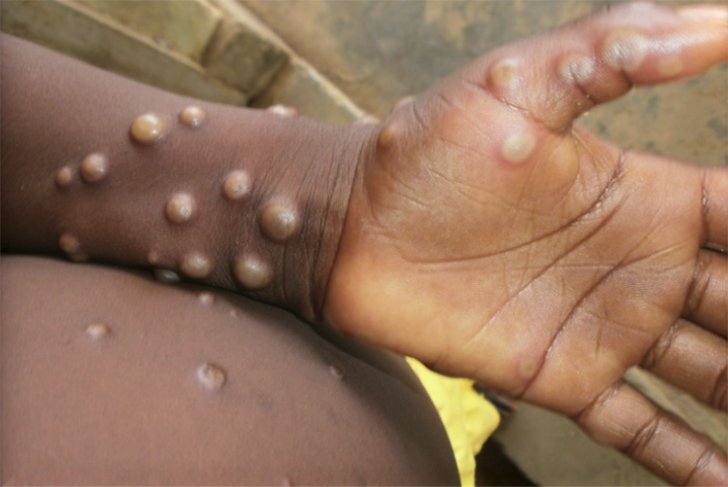
MPOX, formerly known as monkeypox, is an infectious viral disease that can occur in humans and other animals. Symptoms include a rash that forms blisters and then crusts over, fever, and swollen lymph nodes. The illness is usually mild, and most of infected individuals recover within a few weeks without treatment. The time from exposure to the onset of symptoms ranges from five to twenty-one days, and symptoms typically last from two to four weeks. However, cases may be severe, especially in children, pregnant women, or people with suppressed immune systems.
Vaccination is recommended for those at high risk of infection. No vaccine has been developed specifically against mpox, however smallpox vaccines have been found to be effective. There is no specific treatment for the disease, so the aim of treatment is to manage the symptoms and prevent complications. Antiviral drugs such as tecovirimat can be used to treat mpox, although their effectiveness has not been proved.
An outbreak of clade I mpox was detected in the Democratic Republic of Congo during 2023. As of August 2024, it has spread to several African countries, raising concerns that it may have adapted to more sustained human transmission. On 14 August 2024, the WHO declared this outbreak a PHEIC.
The name monkeypox was originally coined because the disease was first identified in laboratory monkeys. This name was later criticized as a misnomer since monkeys are not the main host or reservoir. It was also criticized because the name reinforced racism and stigma about African countries as a source of disease. In November 2022, the WHO announced that it "will adopt the term mpox in its communications, and encourages others to follow these recommendations".
Pneumonic Plague
- Checklists, masks & mystery: What we know about the plague scare in Russia - "Russian authorities have sought to allay global worries over the death of a young woman who worked at a Siberian anti-plague laboratory."
- Ex-Covid czar: Potential plague case raises ‘red flags’ - "The White House is monitoring a suspected Russian pneumonic plague incident that has forced close to 200 people under medical observation."
- Pneumonic plague - Wikipedia.
- Pneumonic plague, by the numbers - "The World Health Organization said Wednesday that it had few clear answers about the recent death of a worker at a Russian institute that researched plague. Here’s what we know about Pneumonic plague by the numbers."
- Russia denies a plague outbreak. Its history of coverups is less reassuring - "From the nuclear disaster in Chernobyl to a deadly outbreak of anthrax in Yekaterinburg and coronavirus, there is a well-oiled tactic of obfuscation and deflection."
- What is pneumonic plague & how dangerous is it? - "Pneumonic plague is a rare, deadly lung infection caused by the bacterium Yersinia pestis. Scientists consider pneumonic plague the most dangerous form of the infection."
- Why a global outbreak of Pneumonic plague is unlikely - "A Russian lab technician has died at a plague research centre in Siberia, but there are many reasons pneumonic plague is usually easily contained."
Hantavirus
- 3 dead in suspected virus outbreak on Atlantic cruise ship - "The World Health Organization said one case of hantavirus infection had been confirmed, with five more suspected cases under investigation."
- Americans from hantavirus-hit cruise ship, including one who tested positive, arrive in Nebraska - "The plane landed at Eppley Airfield in Omaha shortly before 2:30 a.m. local time. Seventeen US citizens and one British national who lives in the US were on the flight."
- Anger & resignation in Tenerife as hantavirus ship approaches - "As the MV Hondius cruise ship approaches Tenerife, the people of the Spanish island await it with a mixture of uncertainty and, in some cases, anger."
- Argentinian tourism hotspot denies causing hantavirus outbreak - "Tourist hotspot at 'end of the world' denies causing hantavirus outbreak. The BBC reports from the city of Ushuaia, where experts have been sent to investigate the origins of the outbreak."
- Canadian cruise passenger isolating in B.C. tests 'presumptive positive' for hantavirus - "B.C.'s top doctor says patient has had no contact with public, virus doesn't pose pandemic risk."
- CDC team to meet Americans on hantavirus-stricken ship as bad weather threatens landing - "The US Centers for Disease Control and Prevention is dispatching staffers to meet with American passengers on the hantavirus-stricken cruise ship in the Canary Islands as Spanish authorities warn of approaching bad weather."
- Egg sandwiches & isolation - Life in US hantavirus quarantine - "Jake Rosmarin made an egg sandwich for breakfast on Wednesday in his quarantine room in Omaha using ingredients ordered from a numbered menu provided by staff at the medical facility he and 15 others expect to call home for the next 40 days."
- French national shows symptoms on return from hantavirus-hit ship - "A passenger of a cruise ship that was struck by an outbreak of hantavirus has shown symptoms of the disease while being repatriated to France, the country's prime minister has said."
- From US to Singapore, countries race to track hantavirus - "Health authorities across several countries are racing to trace and contain an outbreak of the hantavirus after the World Health Organization (WHO) said Thursday that five confirmed infections had been identified among people connected to the cruise ship MV Hondius."
- Global Health Officials Race to Track hantavirus but Predict ‘Limited’ Outbreak - "A Dutch flight attendant and French national were among the latest to be tested in connection with a deadly outbreak on a cruise ship. But an analysis in South Africa showed no mutations in viral samples."
- Hantavirus - "Fact-sheets World Health Organization (WHO): Hantaviruses are zoonotic viruses that naturally infect rodents and are occasionally transmitted to humans. Infection in people can result in severe illness and often death, although the diseases vary by type of virus and geographical location. In the Americas, infection has been known to lead to hantavirus cardiopulmonary syndrome (HCPS), a rapidly progressive condition affecting the lungs and heart, while in Europe and Asia hantaviruses have been known to cause haemorrhagic fever with renal syndrome (HFRS), which primarily affects the kidneys and blood vessels."
- Hantavirus cluster linked to cruise ship travel, Multi-country - "World Health Organization (WHO). Situation at a glace: On 2 May 2026, a cluster of passengers with severe respiratory illness aboard a cruise ship was reported to the World Health Organization (WHO). At that time, according to the ship operator, 147 passengers and crew were onboard, and 34 passengers and crew had previously disembarked. Since the last Disease Outbreak News published on 4 May, three of the suspected cases were confirmed, and one additional confirmed case was reported. As of 8 May, a total of eight cases, including three deaths (case fatality ratio 38%), have been reported. Six cases have been laboratory-confirmed as hantavirus infections, with all identified as Andes virus (ANDV). Through the International Health Regulations (2005) (IHR) channel, National IHR Focal Points (NFPs) have all been informed and are supporting international contact tracing. WHO assesses the risk to the global population posed by this event as low and will continue to monitor the epidemiological situation and update the risk assessment. The risk for passengers and crew on the ship is considered moderate."
- Hantavirus infection - Wikipedia.
- Hantavirus cases nearly doubled in Argentina in the past year - "Experts say climate change is to blame. Hantavirus cases in Argentina have almost doubled in the past year, with the country recording 32 deaths alongside its highest number of infections since 2018."
- Hantavirus outbreak on cruise ship not start of pandemic, UN health agency says - "An outbreak of hantavirus on board a cruise ship is not the start of a pandemic, the UN health agency has said."
- Hantavirus survivor says sickness was like 'hell on earth' - "Lorne Warburton had never heard of the hantavirus until three years ago when he was taken to hospital and put on life support, describing the sickness as 'torture' and 'hell on earth'."
- How to Manage Your Health Anxiety About Hantavirus - "Curate your sources - Don't mistake similarity for sameness - Cap your exposure - Try a worry appointment - Ask a grounding question - Stop ..."
- How worried should we be about hantavirus? - "In an update on Thursday, Dr Maria Van Kerkhove from the World Health Organization (WHO) stressed it was not the start of a pandemic, saying: 'This is not Covid, this is not influenza, it spreads very, very differently.'"
- Human-to-human transmission suspected on board hantavirus cruise ship, WHO says - "Some human-to-human transmission may have occurred on board the cruise ship hit by a hantavirus outbreak that has left three people dead and several others ill, the World Health Organization (WHO) said Tuesday."
- Inside America’s Only Federal Quarantine Unit for Hantavirus Cruise Passengers - "What happens to these passengers in the first 24 hours at the biocontainment unit?"
- Kennedy Orders Woman to Stay in Hantavirus Quarantine, Despite C.D.C. Recommendation - "Others who were in the facility have been allowed to return to their homes in recent weeks for monitoring by local health officials."
- Last passengers leave virus-hit cruise ship as three more test positive - "The MV Hondius departed Tenerife for the Netherlands on Monday after its final six passengers - four Australians, one Briton and one New Zealander - and some crew members disembarked."
- Lessons From the Hantavirus Outbreak - "Sixteen Americans are isolating at a special quarantine center in Omaha, including one person who tested “mildly” positive for the virus."
- Masks, movies & solo deck walks: life aboard a hantavirus-hit cruise ship - "Three people to be evacuated from hantavirus-hit cruise ship as row brews over vessel’s destination."
- No sign of larger hantavirus outbreak, says UN health agency - "But the World Health Organization's chief Tedros Adhanom Ghebreyesus warned 'the situation could change' and there could still be more confirmed virus cases."
- Orthohantavirus - a genus of viruses that includes all hantaviruses (family Hantaviridae) that cause disease in humans. Wikipedia.
- Passengers begin to disembark cruise ship hit with hantavirus - "Carefully planned operation gets underway at the Spanish island of Tenerife as WHO chief reassures concerned local residents."
- The inside story of the hantavirus outbreak - "A Scientist’s Close Call with Hantavirus Aboard the M.V. Hondius Cruise. He was somewhere in the South Atlantic when a friend texted him about an outbreak on a cruise: 'Please tell me you’re not on this ship.'"
- The Ordeal of a 42-Day Hantavirus Quarantine: ‘I Felt Like a Prisoner’ - "Eighteen Americans were isolated for weeks in a Nebraska quarantine facility after being exposed to the deadly virus on a cruise ship. Many found the experience traumatic."
- They were on the trip of a lifetime - "They boarded a cruise ship in Argentina last month for a once-in-a-lifetime expedition across the Atlantic Ocean to see unique wildlife and remote islands. Now they’re quarantined as health officials work to contain a hantavirus outbreak."
- Waves of passengers evacuated from cruise ship hit by deadly hantavirus - "Passengers were seen being ferried from the MV Hondius, anchored at the Port of Granadilla near the Spanish island of Tenerife, to the island after the ship arrived earlier Sunday carrying 147 people. Evacuations involved 94 passengers of 19 nationalities."
- What doctors know about how the Andes hantavirus spreads - "In 2018, health authorities in southern Argentina were racing, trying to understand what had caused nearly three dozen people in the tiny village of Epuyen to fall gravely ill. By the end of the outbreak, 11 of them had died."
- What is hantavirus & how does it spread? - "Hantavirus, a rare disease typically caused by exposure to infected rodents’ urine or feces, is suspected in the deaths of three people after an outbreak aboard a cruise ship in the Atlantic Ocean."
- WHO chief reassures Tenerife residents ahead of arrival of virus-hit cruise ship - "The head of the World Health Organization (WHO) has sought to reassure residents of Tenerife that their risk of infection is low ahead of the arrival of a cruise ship on which an outbreak of hantavirus occurred. Tedros Ghebreyesus stressed that 'this is not another Covid' and that there were no symptomatic passengers currently aboard the MV Hondius."
- World's reaction to hantavirus tinged by echoes of COVID - "COVID ... didn’t just heighten people’s sensitivity to health threats. It did so unevenly, in ways often disconnected from actual risk. As trust in institutions has weakened, people have lost a key way to navigate uncertainty together. Without trust, people rely more on rumor, fear, and emotion, which can lead them to overreact to small risks and underreact to serious ones."
Ebola
- 1st person gets new experimental vaccine for Ebola - "Ed Hunt, 37 and from the UK, voluteered after seeing news reports of the deadly Ebola outbreak in DR Congo."
- Ebola treatments trial begins in DR Congo - "A trial of potential treatments for the species of virus behind the current deadly Ebola outbreak in the Democratic Republic of Congo has begun, the World Health Organization (WHO) has announced. More than 1,400 cases and 438 deaths have been confirmed in the country, according to the WHO."
- 5 things to know about the Ebola outbreak - "At this time, the regional risk is high, but the World Health Organization has maintained that the risk to the broader global community is low. For many of the reasons outlined below, there is a nearly zero chance this becomes a pandemic. Here’s what I want you to know about this outbreak: 1. We lost weeks, maybe months, in the fight against this. 2. Any Ebola outbreak is complicated. This one is extraordinary. 3...."
- American who contracted Ebola in DR Congo evacuated for treatment - "The US national was being evacuated to Germany for treatment after developing symptoms over the weekend, said the US Centers for Disease Control and Prevention (CDC)."
- Americans exposed to Ebola in Africa will be sent to Kenya for care, Trump administration says - "As an Ebola outbreak in the Democratic Republic of Congo continues to grow, the Trump administration says it is focused on keeping the disease out of the United States."
- As Ebola Rages in Countryside, Congo’s Capital Strives to Carry On - "Kinshasa residents continue to pack markets, bars and public transportation, despite growing international concern about the spread of the virus."
- DRC is no stranger to Ebola outbreaks. Why isn’t there a vaccine or treatment to help now? - "The fast-growing Ebola outbreak in the Democratic Republic of Congo came to the world’s attention only a little more than a week ago and is already the third-largest on record. But it’s the 17th outbreak the country has dealt with since the virus was discovered there in 1976."
- DRC’s Ebola outbreak may be worst ever, Africa CDC says - "More than 830 cases of the rare Bundibugyo strain, for which there is no proven treatment or vaccine, have been confirmed in Congo, 196 of them fatal. The disease, transmitted through body fluids even after death, is spreading fast across three provinces in the Democratic Republic of Congo, government data shows. It could cost billions of dollars to contain later if critical weaknesses in the response are not addressed quickly."
- Ebola - Wikipedia.
- 'Ebola has tortured us': Fear grips eastern DR Congo as deadly virus spreads - "The health minister has acknowledged that medics are playing catch-up with the virus after being slow to detect it."
- Ebola-hit DR Congo faces 'catastrophic collision' of disease and conflict, WHO warns - "Dr Tedros Adhanom Ghebreyesus said Ituri province in the east of the country was at the centre of a 'catastrophic collision of disease and conflict'."
- Ebola moving faster than responders can contain it, warns WHO - "The outbreak of the Bundibugyo strain of the virus in the Democratic Republic of Congo is spreading rapidly as residents remain sceptical of health authorities."
- Ebola Outbreak in Central Africa Could Last Months, W.H.O. Says - "Health officials reported more than 130 suspected deaths and 540 cases in the Democratic Republic of Congo and Uganda, but experts say the figures could be much higher."
- Ebola outbreak in DR Congo becomes deadliest in its history - "A total of 2,325 people have been killed by the virus since it was declared on 15 May, surpassing the death toll of the country's 2018-2020 outbreak."
- Ebola outbreak may be spreading faster than first thought, WHO doctor warns - "People living close to the epicentre of an Ebola outbreak which has killed 131 people have told BBC News of their fear, as a World Health Organization (WHO) representative warned cases may be spreading faster than originally thought."
- Ebola outbreak on track to be deadliest ever, WHO chief says - "The outbreak, declared on 15 May, has caused more than 2,000 deaths, with thousands more reported cases."
- Ebola outbreak: strain ‘recently jumped from humans to animals’ - "Uganda has reported more cases of the virus, which has already killed 177, as scientists race to create a vaccine and halt its spread through Africa."
- Ebola risk raised to 'very high' in DR Congo - "The public health risk from the current Ebola outbreak in the Democratic Republic of Congo has been raised from 'high' to 'very high' by the World Health Organization (WHO). In an update on Friday, WHO head Dr Tedros Adhanom Ghebreyesus also said the risk in the wider region in Africa was 'high', but it remained 'low' globally."
- Ebola spread in DR Congo 'deeply alarming', MSF warns - "The rapid spread of Ebola in the Democratic Republic of Congo has created a 'deeply alarming' situation, the medical charity Médecins Sans Frontières (MSF) has warned."
- Epidemic of Ebola Disease caused by Bundibugyo virus in the Democratic Republic of the Congo & Uganda determined a public health emergency of international concern - "World Health Organization (WHO). Official annnouncement."
- France confirms first Ebola case - "More than 260 people in the Democratic Republic of Congo are known to have died during the current outbreak. France has confirmed its first case of Ebola - a doctor who had returned from a humanitarian mission in the Democratic Republic of Congo. The doctor was 'immediately admitted to a specialised facility' and is in a stable condition, the French health ministry said on Wednesday."
- Global scramble to contain new Ebola outbreak as US looks to relocate ‘small number’ of citizens affected - "An international effort is underway to contain an Ebola outbreak in the Democratic Republic of Congo (DRC) and Uganda that has infected hundreds of people and caused dozens of suspected deaths, as the United States looks to relocate a 'small number' of its citizens affected."
- grief fear & hope collide at the epicenter of deadlky ebola outbreak - "CNN's Clarissa Ward, Barbara Arvantidis and Alex Platt gain extraordinary access to the epicenter of a deadly outbreak in the Democratic Republic of Congo, where doctors work around the clock and grief, fear and fragile hope collide inside a hospital struggling to contain the virus."
- How bushmeat, burial rites & disinformation make the DRC an Ebola hotspot - "Scientists believe humans first contracted Ebola by hunting, handling, or eating infected wild animals, collectively known as bushmeat. Such food - particularly bats, monkeys, grasscutters and antelopes - remains popular in the DRC, just one reason why Ebola remains a danger today."
- How worrying is the Ebola outbreak in DR Congo? - "Most Ebola outbreaks tend to be small, but specialists are haunted by the 2014-16 outbreak. Then, 28,600 people in West Africa were infected in the largest ever outbreak of the disease."
- In This Small Town, Ebola Is the Least of Residents’ Concerns - "Hunger and conflict are on the minds of the residents of Akobo, where an outbreak could have devastating consequences."
- Inside the Ebola Epicenter, the Virus Rages With Little to Stop It - "A remote gold mining town is under siege, as medical workers struggle to beat back a surge of deaths and infections."
- Is Ebola Evolving Into a Deadlier Virus? - "The virus that has infected thousands in the Democratic Republic of the Congo has been replicating itself every eighteen hours for more than a year."
- Recovery of Ebola patients offers rare moments of joy at epicentre of outbreak - "There are glimpses of happiness in the Democratic Republic of Congo's fight against the virus that has killed more than 170."
- Red Cross volunteers die from suspected Ebola in DR Congo - "Three Red Cross volunteers died in the Democratic Republic of Congo from suspected Ebola likely caught while managing dead bodies, the organisation has said."
- 'Speed, money & compassion' - lessons from an Ebola survivor & other experts - "Those caught up in West Africa's Ebola outbreak a decade ago on how best to tackle the current epidemic."
- The Ebola Wars - "As an epidemic widens, the virus is mutating. Geneticists are racing to keep up."
- The Gold Mines at the Heart of This Ebola Outbreak - "Mining has been the lifeblood of this remote Congolese hill town for decades. Now, it is fueling the spread of a devastating virus."
- US-bound plane diverts to Canada after person from Ebola-hit region boards 'in error' - "A plane from Paris to Detroit was forced to divert to Canada after a passenger from the Ebola-hit Democratic Republic of Congo boarded the plane 'in error', officials have said."
- US Ebola quarantine facility in Kenya suspended as opposition to containment center grows - "A Kenyan high court has temporarily frozen plans by the United States to establish an Ebola quarantine and treatment facility in Kenya – which has not recorded any Ebola cases – for Americans potentially exposed to the deadly virus in Democratic Republic of Congo (DRC), more than 1,500 miles away."
- Visualizing the Ebola outbreak in maps & charts - "CNN is tracking the locations of confirmed cases in the outbreak, as well as historical cases and deaths. This page will be updated as further details become available."
- What the numbers tell us about the Ebola outbreak - "Tests show that a strain called Bundibugyo - which has no specific treatment or vaccine - is behind the outbreak."
- WHO declares Ebola outbreak in DR Congo a global health emergency - "The agency said the outbreak in DR Congo's eastern Ituri province, which has seen around 246 suspected cases and 80 deaths reported, does not meet the criteria of a pandemic emergency."
- WHO to give update on hantavirus & Ebola after calling DR Congo outbreak an international emergency - "The WHO previously said the outbreak did not meet the criteria of a pandemic emergency, but warned it could be 'much larger' than what's been detected so far."
- Why the Ebola & Hantavirus Outbreaks Have Confounded Scientists - "The types of Ebola and hantavirus worrying officials are very different from the species identified decades ago, raising new questions about how to respond."
Top 55 Up-To-Date mpox & Bird Flu Advice, Facts, News & Resources:
- 3 cases of monkeypox in Monaco - "Monaco’s health authorities have reacted quickly to the appearance of monkeypox in the Principality, and an ‘adequate’ stock of vaccine has been obtained."
- 3 Pressing Questions About Monkeypox: Spread, Vaccination, Treatment - "Containing the outbreak, scientists say, will depend on better understanding the virus’s transmission and how well available tools work."
- 3 ways to know if you need a monkeypox vaccine & how to get one, according to experts - "The monkeypox vaccine Jynneos is in short supply in the US. Monkeypox is not as infectious as COVID, and vaccination is only being recommended for certain groups of people right now. Here's how to know if you qualify, and where to get jabbed if you do."
- African nations hit by mpox still waiting for vaccines - despite promises by the west - "Last week’s planned rollout of doses faces further delays as campaigners complain of greed and inequality."
- Bird Flu - Wikipedia.
- Bird Flu Become Airborne? - "Scientists were slow to recognize that Covid spreads through the air. Some are now trying to get ahead of the bird flu."
- Bird Flu Pandemic Would Be One of the Most Foreseeable Catastrophes in History - "Almost five years after Covid blew into our lives, the main thing standing between us and the next global pandemic is luck. And with the advent of flu season, that luck may well be running out."
- Bird Flu: Scientists Are Racing to Develop a New Bird Flu Vaccine - "Scientists are working on an updated vaccine for H5N1, or bird flu. The most promising approach uses mRNA."
- California declares a state of emergency over monkeypox outbreak, following New York & Illinois - CNBC.
- California declares state of emergency over monkeypox - "State is second in three days to make decision amid push to fight outbreak with vaccines, outreach and education."
- Cases detected in three more countries for first time - "The United Arab Emirates (UAE) has became the first Gulf state to record a case of monkeypox."
- Cases outside Africa rise to 780 in three weeks - "There have been 780 confirmed cases of monkeypox in countries where the virus is not usually found, the World Health Organization says."
- C.D.C. Dismisses Airborne Transmission of Monkeypox. Some Experts Disagree - "The virus 'is not known to linger in the air,' agency officials said. But the research is far from definitive."
- C.D.C. Warns of a Resurgence of Mpox - "A deadlier version of the infectious disease is ravaging the Democratic Republic of Congo, while the type that caused a 2022 outbreak among gay and bisexual men is regaining strength."
- don’t touch foreigners, says China health chief, as first case reported - "Official Wu Zunyou also called for people to avoid ‘skin-to-skin contact’ with those who had been abroad recently, as well as ‘strangers’."
- Failure to deal with mpox outbreak ‘is risk not just to Africa but whole world’ - "Health leaders warn that global response to virus is test case for equity and preparation for future pandemics."
- First deaths outside Africa in Brazil & Spain - "Brazil and Spain have reported their first monkeypox deaths."
- Governor Newsom Proclaims State of Emergency to Support State’s Response to Monkeypox - State of California.
- How Did Mpox Become a Global Emergency 2024? What's Next? - "The virus is evolving, and the newest version spreads more often through heterosexual populations. Sweden reported the first case outside Africa."
- how does it spread & what are the symptoms? - "The monkeypox virus is a less severe cousin of the smallpox virus. Dr. Sanjay Gupta says it has been spreading among younger people as they are less likely to have been inoculated against Smallpox, which was eradicated in 1977."
- 'I am a different person after having monkeypox' - "The 'traumatic experience' of US monkeypox patients. The US declared monkeypox a public health emergency late last week. It follows weeks of concern that more needs to be done to contain the virus."
- Monkeypox cases investigated in Europe, US, Canada & Australia - "Cases of Monkeypox are being investigated in European countries as well as the US, Canada and Australia, according to health authorities and local media reports. The latest new cases were reported in France, Italy, Sweden and Australia."
- Monkeypox fatality confirmed in Los Angeles, a possible US first - "The death is the first in the state and possibly in the country, with the individual being immunocompromised and hospitalized."
- Monkeypox has made its way to Monaco - "A first case of monkeypox has been discovered in the Principality, Dr Olivia Keïta-Perse, head of the epidemiology and hygiene department at the Princess Grace Hospital said on Thursday evening. Transmission is by close contact, skin to skin or mucous membrane-to-mucous contact. Transmission can also be by air droplets. On July 5, there were 577 confirmed cases in France, 387 in the Paris region. The vast majority of cases were in men, with only three women and a child contaminated, according to Public Health France."
- Monkeypox outbreak could be just ‘the peak of the iceberg’, WHO warns - "Pandemic preparedness chief Sylvie Briand says ‘unusual’ spread of virus can be easily contained with the right measures."
- Monkeypox outbreak was waiting to happen, say scientists - "Proportion of people protected has fallen substantially in decades since smallpox vaccination ended."
- Monkeypox virus outbreaks are containable - WHO - "Monkeypox can be contained in countries outside of Africa where the virus is not usually detected, the World Health Organization (WHO) says."
- Mpox - Wikipedia.
- Mpox cases 'highly likely' to rise in Europe, health chiefs warn - "Bavarian Nordic, which supplies Imvanex injections to the NHS, is seeking approval to offer the drug to children after global emergency declared."
- Mpox ISN'T the new Covid, WHO announce in urgent update on spread of deadly virus - "Europe is registering 100 new mpox cases every month, a World Health Organization (WHO) chief warned today."
- Mpox (monkeypox) - World Health Organization - "The monkeypox virus is an orthopoxvirus that causes mpox (monkeypox), a disease with symptoms similar to smallpox, although less severe."
- new mpox variant may appear to be less deadly but it is spreading fast. Complacency would be a grave error - "If the world has learned anything from the Covid pandemic, it is that new viruses must be stopped in their tracks."
- Now should I worry about monkeypox? Our medical analyst explains - "Monkeypox is spreading in the United States and around the world. There are at least 26,000 infections documented in over 80 countries. The World Health Organization has declared it a public health emergency of international concern. The US Centers for Disease Control and Prevention is reporting more than 6,600 infections, just two months after monkeypox was first detected in this outbreak, and on Thursday, the Biden administration officially declared monkeypox to be a public health emergency in the United States."
- Outbreak of mpox caused by Monkeypox virus clade I in the Democratic Republic of the Congo - "Despite this increase in cases, the overall risk from this outbreak in the DRC for the general population in the EU/EEA and for MSM with multiple sexual partners in the EU/EEA remains low."
- Pain, Fear, Stigma: What People Who Survived Monkeypox Want You to Know - "Seven patients share their stories of devastating symptoms, their frustration over finding care and their efforts to help each other when doctors and officials have failed."
- Roche develops unique PCR tests to detect the monkeypox virus - "Roche and its subsidiary TIB Molbiol have developed three different LightMix Modular Virus kits for the detection of the monkeypox virus."
- San Francisco declares emergency as monkeypox cases rise - "California city has recorded 261 cases so far and declaration will allow authorities to mobilize more staff and resources."
- Should we be wooried about monkeypox? - "What is monkeypox and why is it spreading? The virus that causes monkeypox was first discovered at the end of the 1950s, but there are signs it has undergone changes in the past three to four years that have enabled it to pass between humans more easily."
- Slow response to monkeypox exposes ‘tired, overworked’ US health agencies - "Virus has taken hold amid ragged system ravaged by years of underfunding, messy bureaucracy and Covid."
- Sweden confirms first case of mpox - "Global health officials on Thursday confirmed an infection with a new strain of the mpox virus in Sweden and linked it to a growing outbreak in Africa, the first sign of its spread outside the continent a day after the World Health Organization declared the disease a global public health emergency."
- Thailand Confirms Asia's First Case of New Mpox Virus Strain - "Thailand has detected the new mutated strain of mpox virus, as the pathogen spreads to more geographies after the World Health Organization declared the outbreak in Africa a new global health emergency. The patient who tested positive for clade Ib was a European male who arrived in Bangkok last week from Africa, according to the Department of Disease Control of Thailand's health ministry."
- There’s Just One Drug to Treat Monkeypox. Good Luck Getting It - "Doctors who want to prescribe tecovirimat, or Tpoxx, must navigate a gantlet of bureaucratic hurdles that experts say could be quickly lifted."
- Three Pressing Questions About Monkeypox: Spread, Vaccination, Treatment - "Containing the outbreak, scientists say, will depend on better understanding the virus’s transmission and how well available tools work."
- Time to worry or one to ignore? - "If you're still reeling from the Covid pandemic, well sorry but there's another virus to get to grips with. This time it's monkeypox and there are around 80 confirmed cases in 11 countries, including the UK, that would not normally expect to have the disease."
- Travellers advised to consider mpox vaccine - "Travellers should consider getting vaccinated against mpox if they will be visting affected areas in Africa, new advice says. The European Centre for Disease Prevention and Control (ECDC) has updated its recommendations in response to outbreaks of a new strain of the virus. Other continents, including Europe, can expect some cases too, it says."
- Unlikely monkeypox outbreak will lead to pandemic, WHO says - "The World Health Organization does not believe the monkeypox outbreak outside Africa will lead to a pandemic, an official said on Monday, adding it remains unclear if infected people who are not displaying symptoms can transmit the disease."
- US declares Monkeypox outbreak a public health emergency - "The decision will speed up the distribution of vaccines, treatments and federal resources to curb the spread of the virus. Cases have topped 6,600 in the US, according to health officials."
- U.S. Plans to End Mpox Emergency Declaration in Two Months - "With few new cases, the plan not to renew the emergency past Jan. 31 is an acknowledgment that the disease previously known as monkeypox has mostly been suppressed."
- What is monkeypox & how do you catch it? - "Cases of monkeypox - a rare, little-known disease - are being investigated in European countries including the UK, as well as in the US, Canada and Australia."
- What puts someone at risk of catching monkeypox? - "As monkeypox spreads across the United States, it may be giving people flashbacks to the days of wiping down counters and groceries to get rid of the coronavirus. But for most people, the risk of getting monkeypox remains low. Almost all cases in the current outbreak - 98 percent - have been in adult men who have sex with men."
- WHO declares mpox a global public health emergency 2024 for second time in two years - "The World Health Organization on Wednesday declared mpox a global public health emergency for the second time in two years, following an outbreak of the viral infection in Democratic Republic of Congo that has spread to neighbouring countries."
- WHO declares monkeypox a public health emergency of international concern - "The decision was announced Saturday morning after WHO convened its second emergency committee on the issue on Thursday. 'I have decided that the global monkeypox outbreak represents a public health emergency of international concern,' WHO Director-General Tedros Adhanom Ghebreyesus announced on Saturday morning."
- Who Is Protected Against Monkeypox? - "Older people who received smallpox vaccinations may yet have some immunity, researchers say. Healthy children and adults generally do not become severely ill."
- WHO recommends new name for monkeypox disease - "Following a series of consultations with global experts, WHO will begin using a new preferred term “mpox” as a synonym for monkeypox. Both names will be used simultaneously for one year while 'monkeypox' is phased out. When the outbreak of monkeypox expanded earlier this year, racist and stigmatizing language online, in other settings and in some communities was observed and reported to WHO. In several meetings, public and private, a number of individuals and countries raised concerns and asked WHO to propose a way forward to change the name."
- Why Monkeypox Vaccine Shortage May Threaten the Immunocompromised - "People with H.I.V. and other immune-system problems may need the full two-dose regimen, researchers say. But the shots, particularly second doses, are hard to come by."
|
|