Top 50 High-End Stationery/Business Cards Suppliers
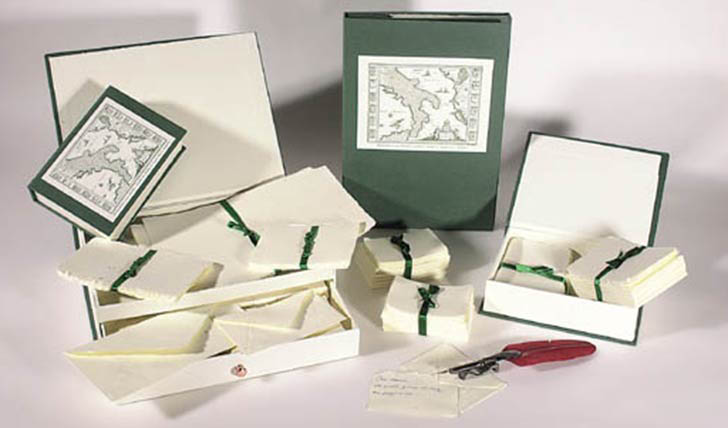
STATIONERY has historically meant a wide gamut of materials: paper and office supplies, writing implements, greeting cards, glue, pencil case etc.
Originally the term "stationery" referred to all products sold by a stationer, whose name indicates that his book shop was on a fixed spot, usually near a university, and permanent, while medieval trading was mainly ambulant, by peddlers (including chapmen, who sold books) and others (such as farmers and craftsmen) at non-permanent markets such as fairs. It was a special term used between the 13th and 15th centuries in the manuscript culture.
In its modern sense of (often personalized) writing materials, stationery has been an important part of good social etiquette, particularly since the Victorian era. Some usages of stationery, such as sending a manufactured reply card to a wedding invitation, has changed from offensive to appropriate.
The usage and marketing of stationery is a niche industry that is increasingly threatened by electronic media. As stationery is intrinsically linked to paper and the process of written, personalized communication, many techniques of stationery manufacture are employed, of varying desirability and expense. The most familiar of these techniques are letterpress printing, embossing, engraving, and thermographic printing (often confused with thermography). Flat printing and offset printing are regularly used, particularly for low cost or informal needs.
Styles of printed stationery techniques: Letterpress printing is a printing method that requires characters being impressed upon the page. The print may be inked or blind but is typically done in a single color. Motifs or designs may be added as many letterpress machines use movable plates that must be hand-set. Embossing is a printing technique used to create raised surfaces in the converted paper stock. The process relies upon mated dies that press the paper into a shape that can be observed on both the front and back surfaces. Engraving is a process that requires a design to be cut into a plate made of a relatively hard material. It is a technology with a long history and requires significant skill and experience. The finished plate is usually covered in ink, and then the ink is removed from all of the un-etched portions of the plate. The plate is then pressed into paper under substantial pressure. The result is a design that is slightly raised on the surface of the paper and covered in ink. Due to the cost of the process and expertise required, many consumers opt for thermographic printing, a process that results in a similarly raised print surface, but through different means at less cost.
BUSINESS CARDS are cards bearing business information about a company or individual. They are shared during formal introductions as a convenience and a memory aid. A business card typically includes the giver's name, company affiliation (usually with a logo) and contact information such as street addresses, telephone number(s), fax number, e-mail addresses and website. It can also include telex, bank account, tax code. Traditionally many cards were simple black text on white stock; today a professional business card will sometimes include one or more aspects of striking visual design.
The CARTE DE VISITE, abbreviated CdV, was a type of small photograph which was patented in Paris by photographer André Adolphe Eugène Disdéri in 1854, although first used by Louis Dodero. It was usually made of an albumen print, which was a thin paper photograph mounted on a thicker paper card. The size of a carte de visite is 54.0 mm (2.125 in) × 89 mm (3.5 in) mounted on a card sized 64 mm (2.5 in) × 100 mm (4 in). In 1854, Disdéri had also patented a method of taking eight separate negatives on a single plate, which reduced production costs. The Carte de Visite was slow to gain widespread use until 1859, when Disdéri published Emperor Napoleon III's photos in this format. This made the format an overnight success. The new invention was so popular it was known as "cardomania" and it spread throughout Europe and then quickly to America and the rest of the world.
A VISITING CARD, also known as a calling card, is a small paper card with one's name printed on it. They first appeared in China in the 15th century, and in Europe in the 17th century. The footmen of aristocrats and of royalty would deliver these first European visiting cards to the servants of their prospective hosts solemnly introducing the arrival of their owners.
Visiting cards became an indispensable tool of etiquette, with sophisticated rules governing their use. The essential convention was that one person would not expect to see another person in her own home (unless invited or introduced) without first leaving his visiting card for the person at her home. Upon leaving the card, he would not expect to be admitted at first, but might receive a card at his own home in response. This would serve as a signal that a personal visit and meeting at home would not be unwelcome. On the other hand, if no card were forthcoming in return, or if a card were sent in an envelope, a personal visit was thereby discouraged. As an adoption from French and English etiquette, visiting cards became common amongst the aristocracy of Europe, and also in the United States. The whole procedure depended upon there being servants to open the door and receive the cards and it was, therefore, confined to the social classes which employed servants.
Some visiting cards included refined engraved ornaments, embossed lettering, and fantastic coats of arms. However, the standard form visiting card in the 19th century in the United Kingdom was a plain card with nothing more than the bearer's name on it. Sometimes the name of a gentlemen's club might be added, but addresses were not otherwise included. Visiting cards were kept in highly decorated card cases.
The visiting card is no longer the universal feature of upper middle class and upper class life that it once was in Europe and North America. Much more common is the business card, in which contact details, including address and telephone number, are essential. This has led to the inclusion of such details even on modern domestic visiting cards, a practice endorsed by modern books of etiquette.
Business Cards & Visiting Cards
- 123Print - "Custom Business Cards." Creating a business card that shows off your brand is easy as 1, 2, 3. Choose from our selection of business card styles, then personalize a design template or upload your own logo at no extra cost.
- 48hourprint.com - "Printing business cards online never felt better:Tons of Choices - Full Color, Folded and Rounded Corners."
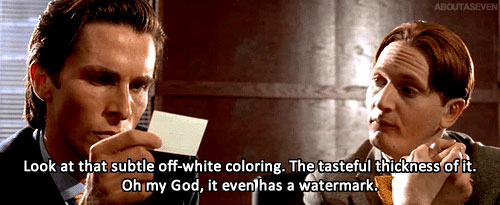
- American Psycho Business Card Business Card - Zazzle.
- American Psycho Design - "Ultra Destinguished High Quality Business Card Designs."
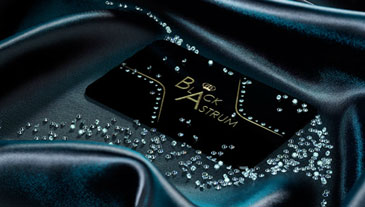 - BLACK ASTRUM - world's most expensive business cards featuring Swiss metal, diamonds: "Black Astrum Signature Cards (encrusted in diamonds of the highest quality) are produced in limited numbers and are offered to new members by invitation only." The cards are custom-made and sold in packs of 25, 50 or 100.
- Cardissimo Carbon Fibre Business Card - made with genuine carbon fiber using three sheets of hand-varnished material.
- CRANE & CO. - founded in 1801. "Fine Business Cards. Letterpress Business Cards."
- FedEX - "Choose from thousands of templates or upload your own design to get started today."
- GotPrint - "Full Color Glossy Business Cards." High quality full color offset printing on multiple premium paper options. UV Coating will apply to both sides, on 14pt Gloss Coated Cover with color both sides, unless No UV Coating on Back is selected.
- JukeBox - "Our wide range of products boast rare and impressive materials like Cotton, Wood, Pulp, Premium Black, and Cork. Our print services include premium options like foiling, embossing, laser-cutting, letterpress and coloured edging."
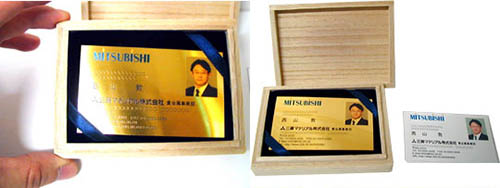 - Mitsubishi Materials Fine Gold Card - "Custom Gold business card by Mitsubishi."
- MOO Business Cards - "Create your customized business card online."
- Morning Print - "Impression for success." Professional business cards.
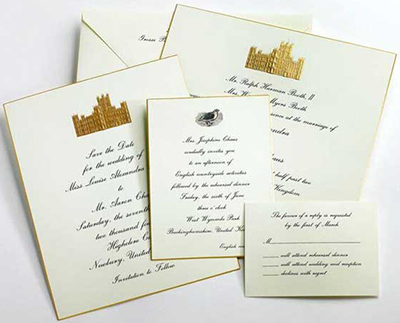 - Mrs. John L. Strong Fine Stationery - "Since 1929, Mrs. John L. Strong has upheld the tradition of handcrafting the finest stationery of the highest quality for the discerning customer. We continue to employ old world techniques, including hand engraving of each die or plate, hand bordering of each card, hand lining of every envelope and hand finishing of every order we produce." 699 Madison Avenue, New York, U.S.A.
- Overnight Prints - "Business Cards | Customize or Upload your own."
 - Patrick Bateman Luxe Business Cards - Double-sided business cards. "Not every Business Card comes with its own coat of arms and a great typeface, but then, not every Business Card is inspired by the lead character in Brett Easton Ellis’s 'American Psycho', a man with very meticulous tastes."
- Pettinaroli - "Classic stationer shop, since 1881." Milan Italy.
- Print Place - "Fast Business Card Printing Online."
- PsPrint - "High-Quality Businesss Cards." Our standard business cards come in both standard 3.5” x 2” size, and slim and square formats, all available on numerous premium papers including ultra-thick 16-point gloss and smooth 15-point velvet. For extra appeal, try adding rounded corners to your card.
- SMYTHSON OF BOND STREET - since 1887. "Over 125 Years of British Luxury."
- T-RexCards.com - "Raised Letter Business Cards."
- Taste of Ink - "Business Card Design & Custom Business Cards."
- VistaPrint - "Business Cards - Make Your Own Custom Cards."
- Zazzle - "Custom Business Cards." Stand out from the crowd with a business card that is singular to your personality. Zazzle offers you the option of creating a custom business card in various shapes and sizes. You have your standard, your chubby, or your skinny style. You can also have rounded or squared edges.
Card Cases & Holders
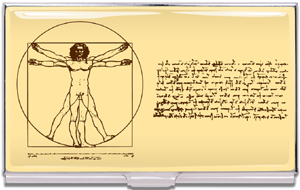 - ACME STUDIO - men's & women's. All models.
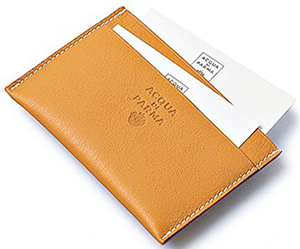 - ACQUA DI PARMA - since 1916. "The excellence of Italian craftsmanship."
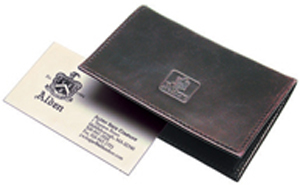 - ALDEN - since 1884. Folding Business Card Case.
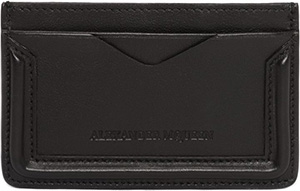 - ALEXANDER MCQUEEN - Heroic Card Holder.
- Anna Walker London - men's & women's.
- A.P.C. - Italian grained leather card holder.
- AQUASCUTUM - since 1851. "Understated British elegance." Men's.
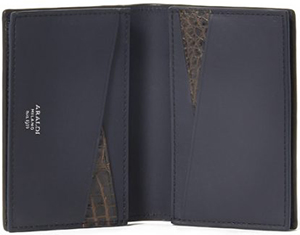 - Araldi - "Handmade in Italy, since 1930." Men's.
- Aspinal of London - men's business card holders.
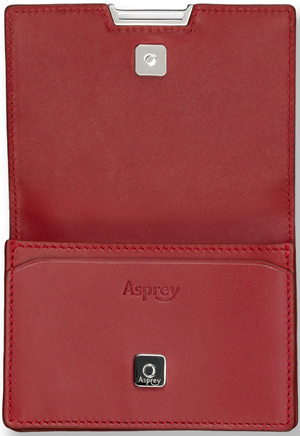 - ASPREY - "British Luxury Goods Since 1781." Men's & women's card cases.
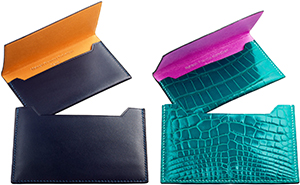 - Atelier Renard - "Sellier à Paris." Paris-based perfumer Maison Francis Kurkdjian has collaborated with Brigitte Montaut, the designer and director of Atelier Renard, for a new line of fragranced leather pieces: a colorful and fun new line of leather goods, the 'Twin-Set' cardholder pieces. The line features Mississippi alligator leather, lambskin and calfskin, all tanned in France and dyed into stunning colors.
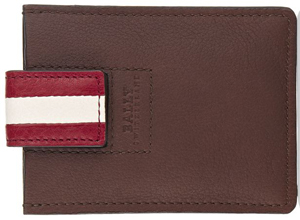 - BALLY - men's & women's card holders.
 - Barbour - since 1894. Men's.
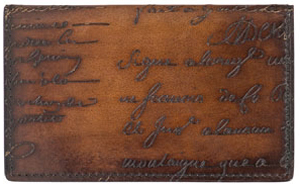 - BERLUTI - Paris since 1895. "The ultimate expression of luxury for men."
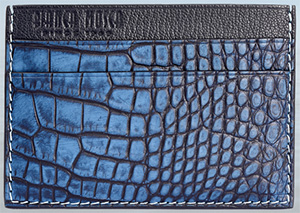 - Bianca Mosca - since 1946. Bespoke alligator card holders.
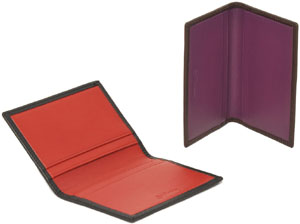 - Bill Amberg - men's.
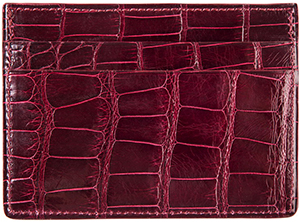 - Billionaire Couture - men's.
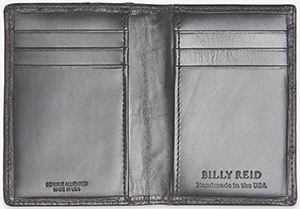 - Billy Reid - men's alligator card wallet.
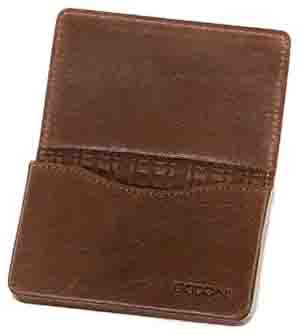 - Boconi - men's.
 - Bottega Veneta - men's.
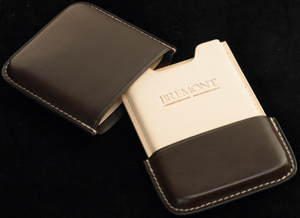 - BREMONT - leather business card holder.
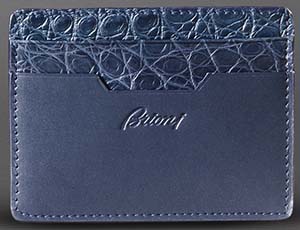 - BRIONI - since 1945. Men's.
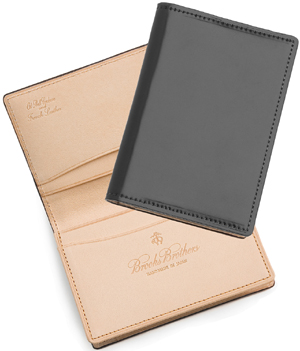 - BROOKS BROTHERS - men's card case.
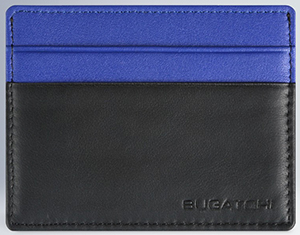 - Bugatchi - since 1981. Men's & women's.
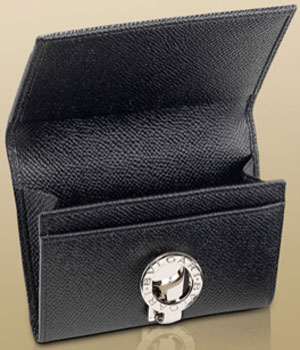 - Bulgari - business card holder.
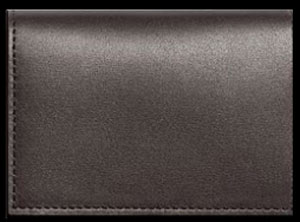 - Caran d'Ache - men's & women's business card holders.
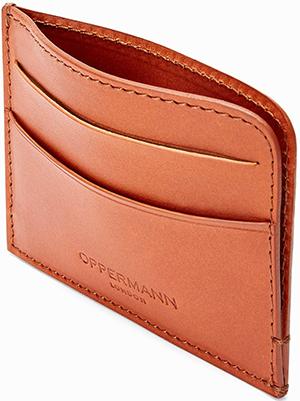 - Carl Friedrik - men's.
 - CARTIER - Business card holder with milleraies decor.
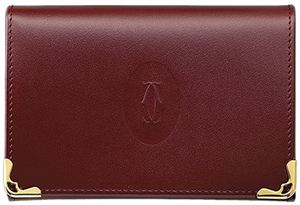 - CARTIER - Must de Cartier business card holder.
- Cedes Milano - men's & women's business card and credit card holders.
- CHARLOTTE OLYMPIA - "To Die For." Women's.
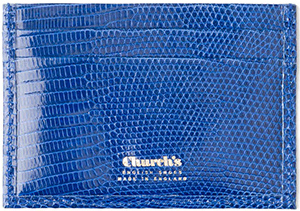 - CHURCH'S - men's & women's.
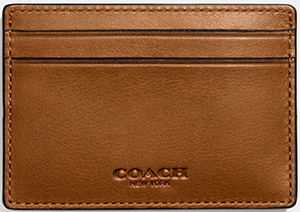 - COACH - since 1941. Men's.
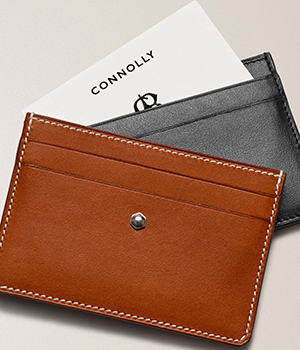 - CONNELLY - men's.
 - CORNELIANI - men's.
 - CORTER LEATHER & CLOTH - men's.
 - Corthay - Paris since 1990. Men's.
- CROSS - men's card case.
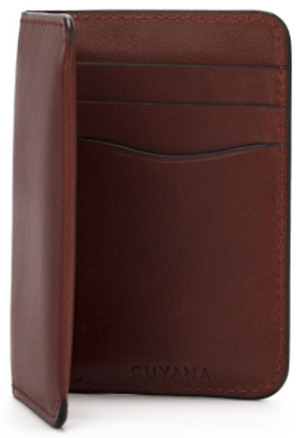 - Cuyana - men's folding cardholder.
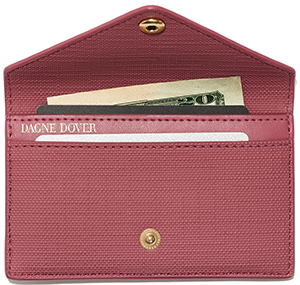 - Dagne Dover - men's & women's card case.
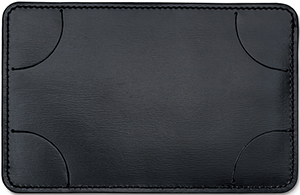 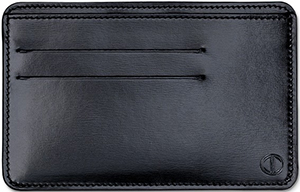 - DAVIDOFF - men's note pad with 2 handy pockets for your credit cards.
 - DAVIDOFF - men's credit card holders.
- DIOR - men's card holders.
- DIOR - women's card holders.
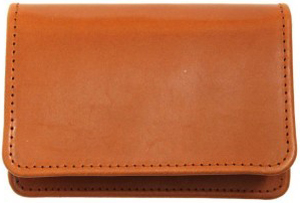 - DRAKE'S LONDON - men's.
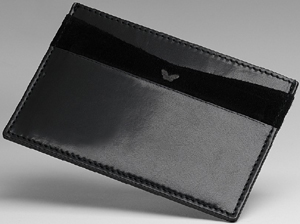 - DUCHAMP LONDON - men's card case.
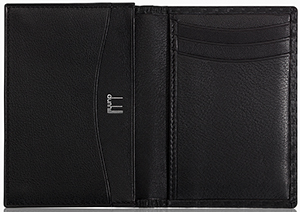 - DUNHILL - men's.
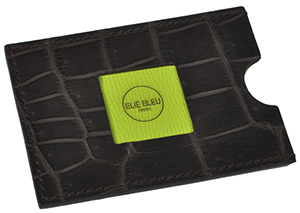 - ELIE BLEU Paris - since 1976. Crocodile credit card holders.
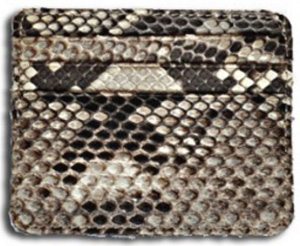 - Emillo Santo - men's.
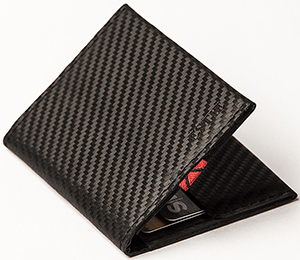 - Éstie - men's card cases.
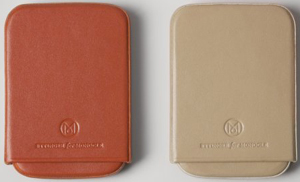 - Ettinger - cardholder by Monocle.
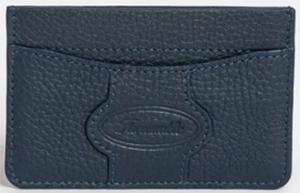 - FAÇONNABLE - men's.
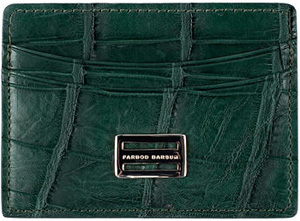 - FARBOD BARSUM - men's pocket 5-card case.
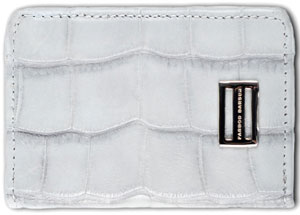 - FARBOD BARSUM - men's & women's business card cases.
- Florsheim - since 1892. Men's.
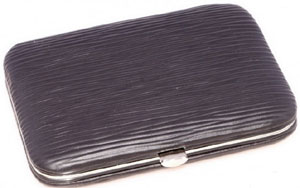 - Fort Belvedere - men's & women's business card cases.
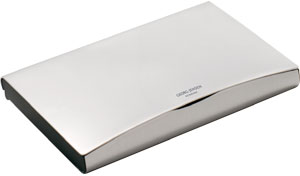 - GEORG JENSEN - men's cardholders.
- Ghurka - since 1975. Men's.
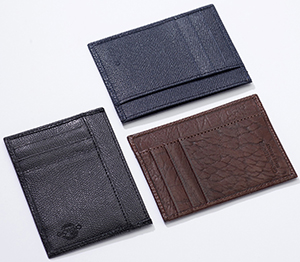 - GIORGIO G - men's.
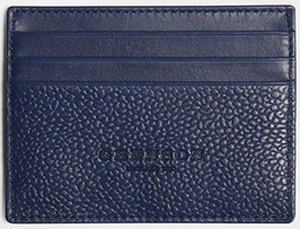 - GRENSON - since 1866. Men's & Women's cardholders.
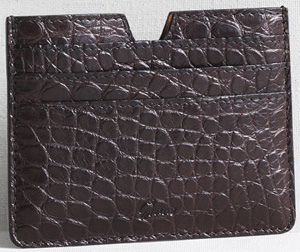 - Graae - since 1967.
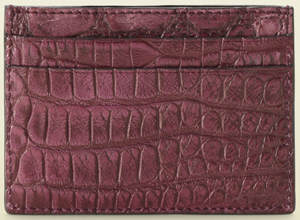 - Gucci - card cases: all models.
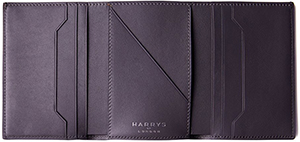 - Harrys of London - men's.
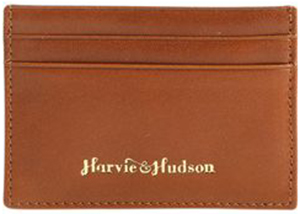 - HARVIE & HUDSON - men's. "The Family Owned Jermyn St Shirtmakers Since 1949."
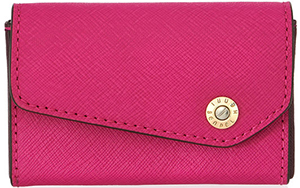 - HENRI BENDEL - women's.
- HOLLAND & HOLLAND - black leather business card case.
- Horizn Studios - men's & women's.
- Ines de la Fressange Paris - "La Maison du Chic Parisien." Women's.
- JACK Spade - men's.
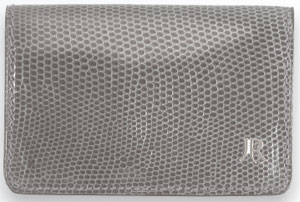 - JEAN ROUSSEAU - business card holders.
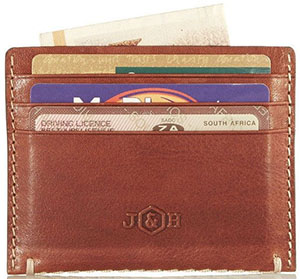 - Jekyll & Hyde - men's.
- Jigsaw - men's.
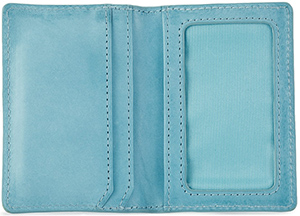 - Jigsaw - women's.
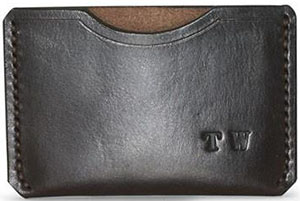 - Jimmie William - "Perfect for a travel card, business cards or to use as a small wallet." Men's.
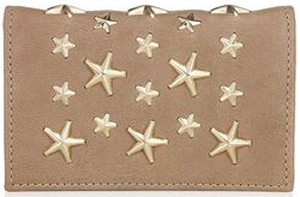 - JIMMY CHOO -business card holders.
- J.M. WESTON - men's business card holder.
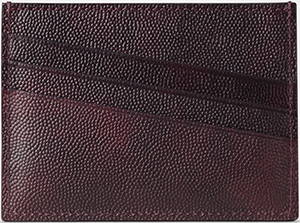 - John Lobb - since 1866. Men's.
- JOHN VARVATOS - men's.
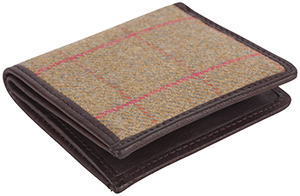 - Johnstons of Elgin - since 1797. Men's & women's.
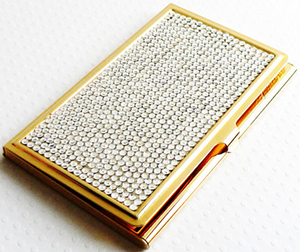 - Judith Leiber - bespoke monogram business card holder.
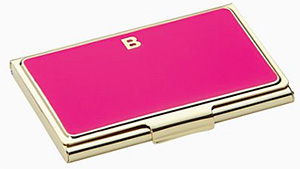 - Kate Spade - women's.
- KRIS VAN ASSCHE - men's.
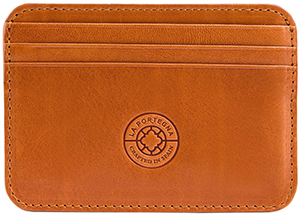 - La Portegna - men's.
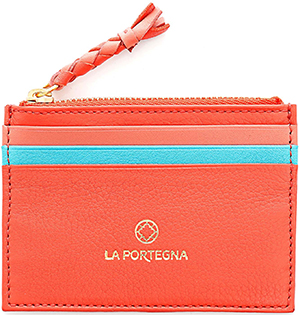 - La Portegna - women's.
- LACOSTE - men's.
- Lanvin - men's.
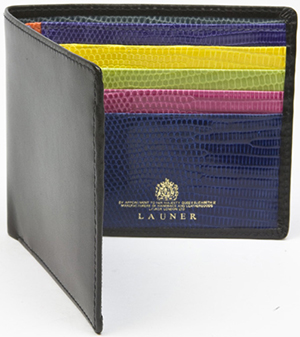 - Launer London - "Handcrafted in England." Men's & women's.
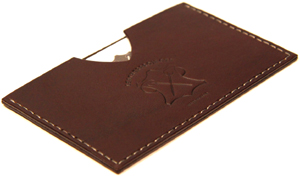 - LeatherProjects - men's.
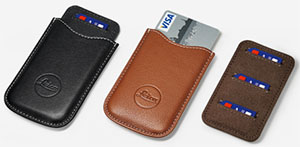 - Leica - SD card & credit card holders.
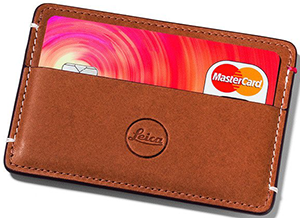 - Leica Leather Cardholder
- LONGCHAMP - card cases.
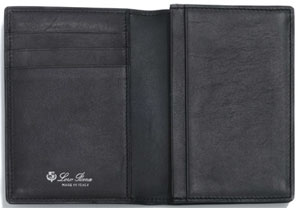 - LORO PIANA - since 1924.
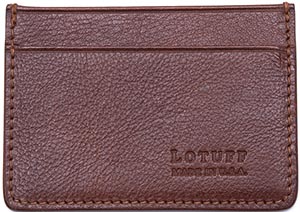 - Lotuff - "Handmade in U.S.A." Men's.
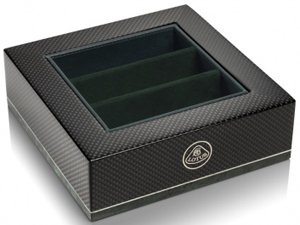 - LOTUS - carbon desk card holder.
- LOTUS - leather double card holder.
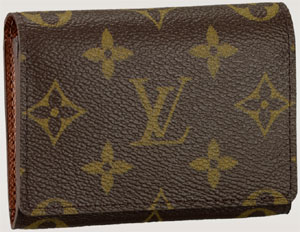 - LOUIS VUITTON - men's card holders. All models.
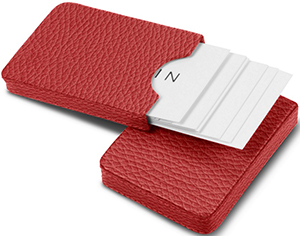 - Lucrin - founded in Switzerland in 1994. Men's & women's.
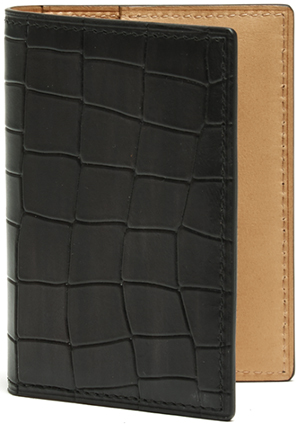 - MAGNANNI - since 1954. Men's.
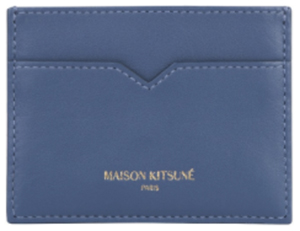 - MAISON KITSUNÉ - men's & women's.
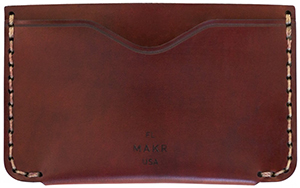 - Makr - men's & women's.
- Malton & Kielman - "Bespoke bags and accessories." Men's & women's.
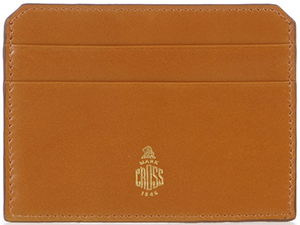 - MARK CROSS - since 1845. "America's First Luxury Leather Goods Brand." Men's.
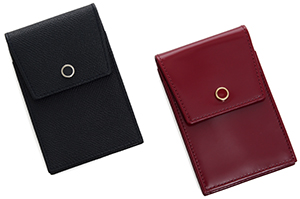 - MARK CROSS - since 1845. "America's First Luxury Leather Goods Brand." Women's.
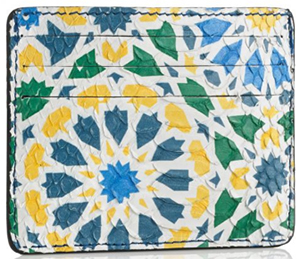 - Mark Giusti - men's & women's.
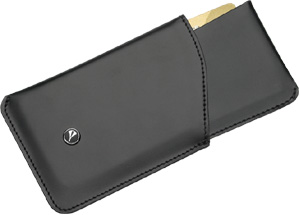 - MARLEN - men's.
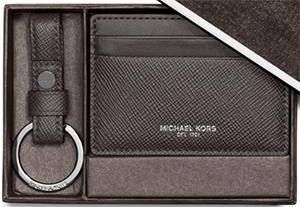 - MICHAEL KORS - men's.
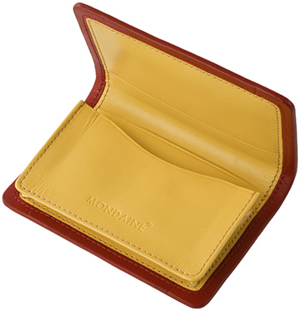 - MONDAINE - men's & women's card holders.
- Monocle - Ettinger cardholder.
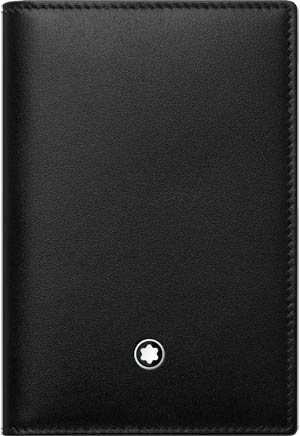 - Montblanc - business card holder.
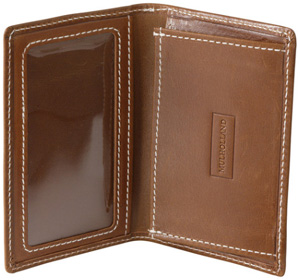 - MULHOLLAND - men's business card cases & wallet.
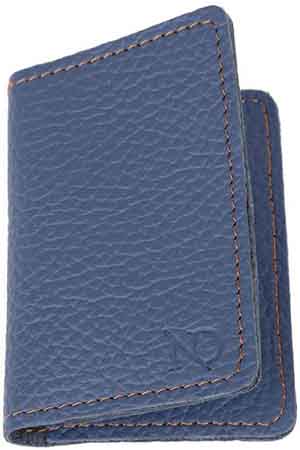 - N'Damus London - since 2006. Men's.
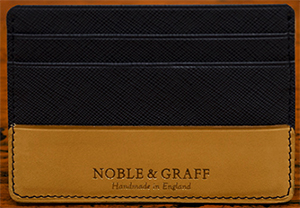 - Noble & Graff - men's & women's. "Handmade in England."
 - OLIVER Spencer - men's business card holder.
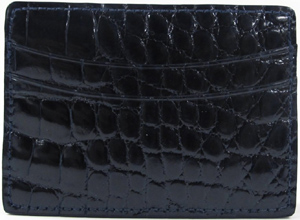 - Ovadia & Sons
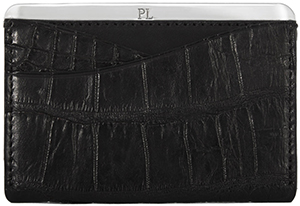 - Passavant and Lee - since 2013. "Luxury men's accessories brand combining beautiful raw materials & innovative design with classic British and American style." Men's.
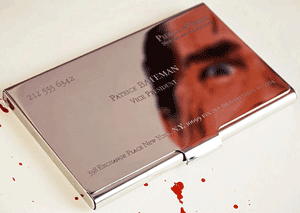 - Patrick Bateman Business Card Holder - Firebox.
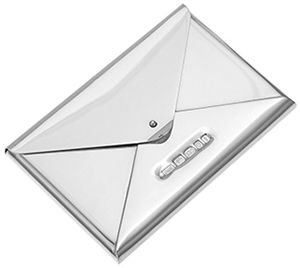 - Philip Kydd - Silver Credit/Business Card Holder.
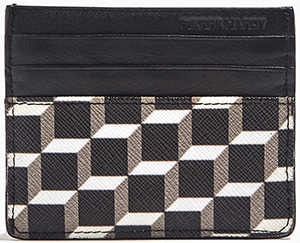 - PIERRE HARDY - men's.
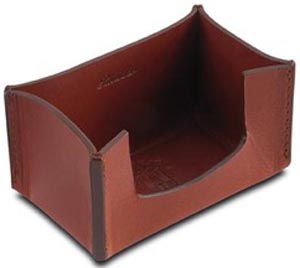 - PINEIDER - desk business card holders & business card holders with flap.
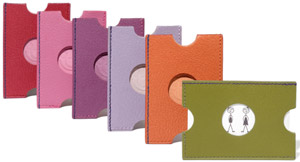 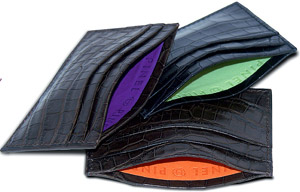 - Pinel & Pinel
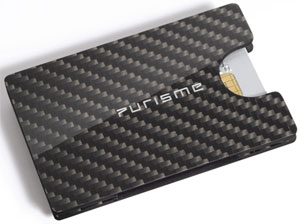 - PURISME - carbon card case.
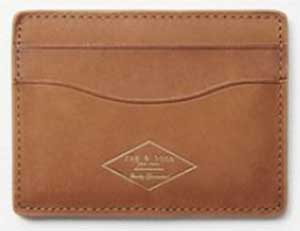 - Rag & Bone - men's.
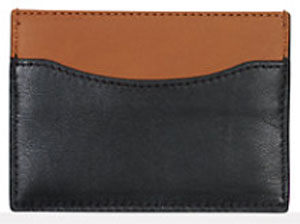 - RALPH LAUREN - card case.
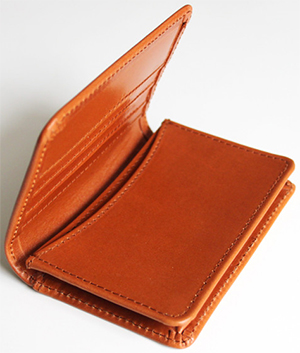 - RICHARD ANDERSON - 13 Savile Row, London, England, U.K. Men's.
- Richard James - Savile Row, London, England, U.K. Men's.
- Roberto Cavalli - men's.
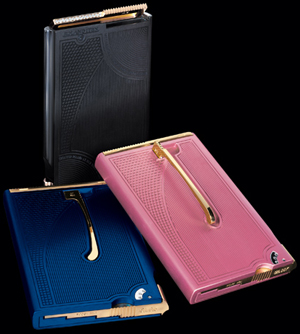 - ROLAND ITEN - men's & women's RCD 81 Mark I mechanically performing credit card dispenser. Issued in limited edition and numbered series.
- Sage Brown - men's.
- Sage Brown - women's.
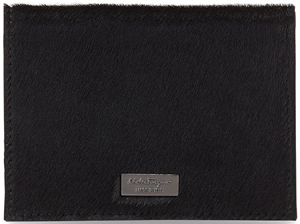 - Salvatore Ferragamo - business card holder.
- Sandro - men's cardholder in Saffiano leather.
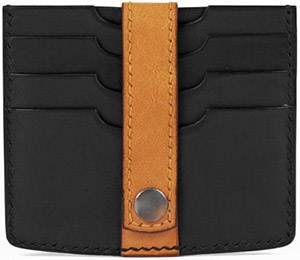 - Self-Made Bags - men's.
 - Shinola - men's.
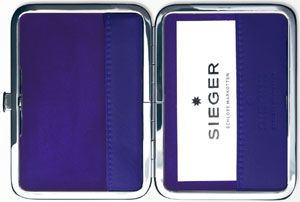 - SIEGER - card cases.
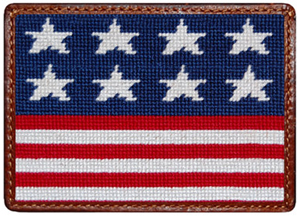 - SMATHERS & BRANSON - needlepoint card wallets.
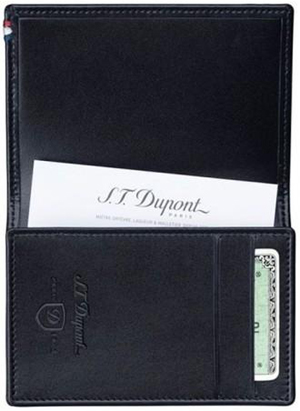 - S.T. DUPONT - business card holder.
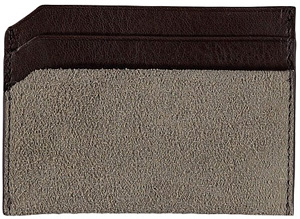 - Suitsupply - men's.
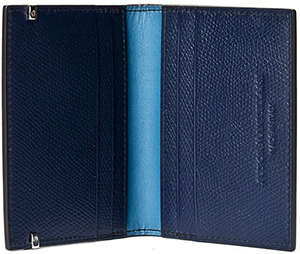 - SUTOR MANTELLASSI - men's.
- SWAINE ADENEY BRIGG - "250 Years' of British Craftsmanship." Bespoke & Personalisation.
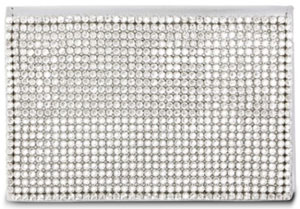 - SWAROVSKI - card holders.
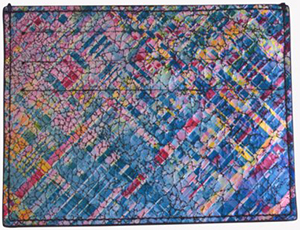 - TATEOSSIAN - men's.
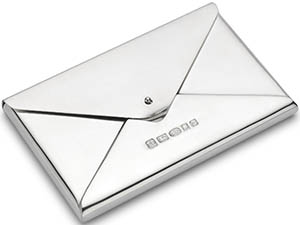 - Theo Fennell - since 1952. "Our Silverware is all made in England by our absolutely brilliant Silversmiths who keep this great British tradition alive."
- Theory - men's cardholder.
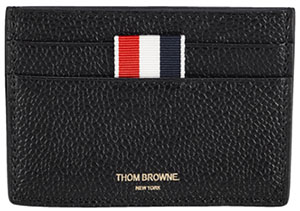 - THOM BROWNE - men's.
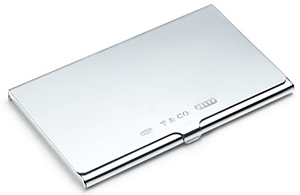 - TIFFANY & CO. - business card case. American Psycho 'style' card case.
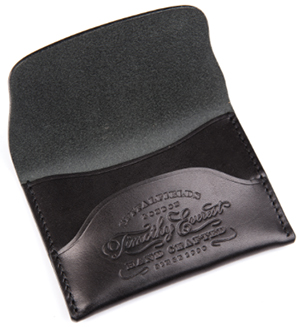 - Timothy Everest - men's.
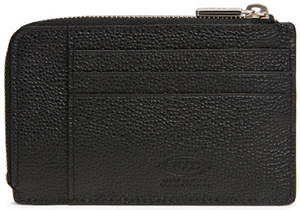 - TOD'S - Made in Italy since 1920. Men's business cardholders.
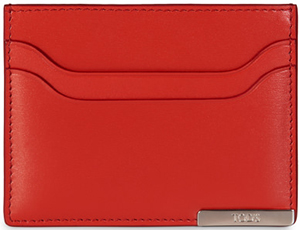 - TOD'S - Made in Italy since 1920. Women's cardholders.
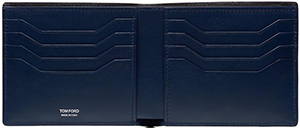 - Tom Ford - men's.
- Tomas Maier - men's.
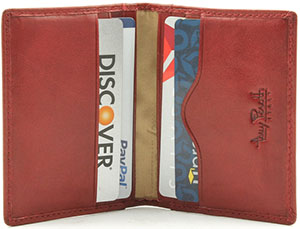 - Tony Perotti - men's & women's.
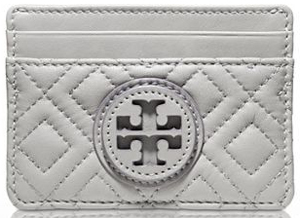 - TORY BURCH - women's card case.
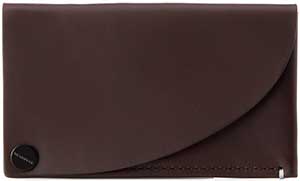 - Troubadour - men's.
- TUMI - men's & women's card cases.
- TYLER & TYLER - men's & women's card holders.
- UDESHI - men's & women's card holders.
- Undandy - "Conspicuously Unconspicuous." Men's & women's leather cardholder.
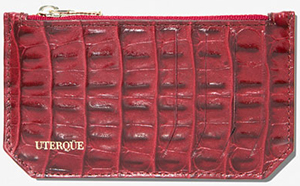 - UterqÜe - women's.
 - VALENTINO - men's.
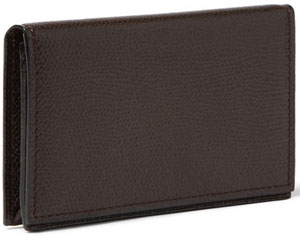 - VALEXTRA - men's.
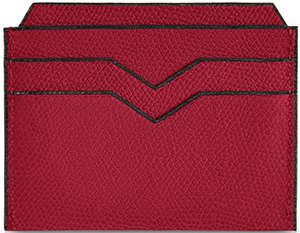 - VALEXTRA - women's.
- Veja - women's.
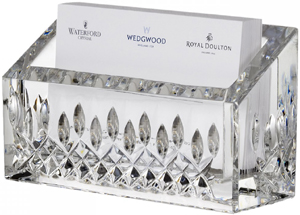 - WATERFORD - founded in 1783. Crystal Lismore Essence Business Card Holder.
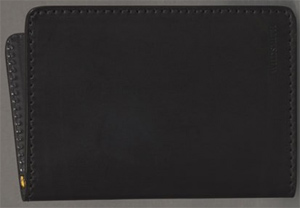 - Wildsmith - since 1847. Handmade in England. Card holder.
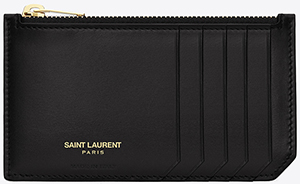 - YVES SAINT LAURENT - men's card cases.
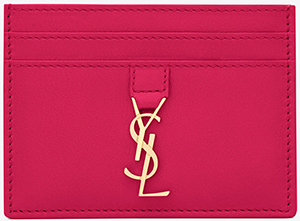 - YVES SAINT LAURENT - women's card cases.
Office Desk Acessories
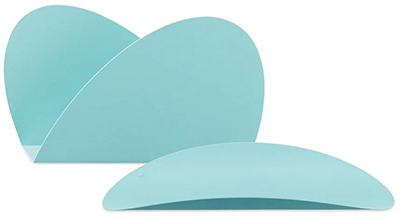 - Alessi - since 1921. "Take your home office set-up to the next level, with Alessi desktop accessories. From envelope openers to paperclip storage, our office selection is home to a wide range of decorative yet functional gadgets and accessories."
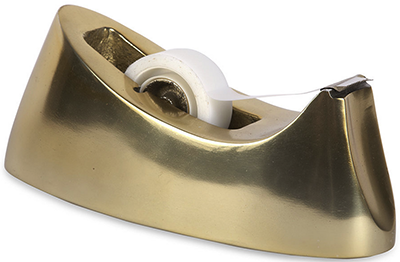 - Amara - since 2005. "Keep a clutter-free desk with our collection of luxury desk accessories. From letter trays and pen pots to mousepads and desk mats, you’ll find everything you need to create a stylish work space."
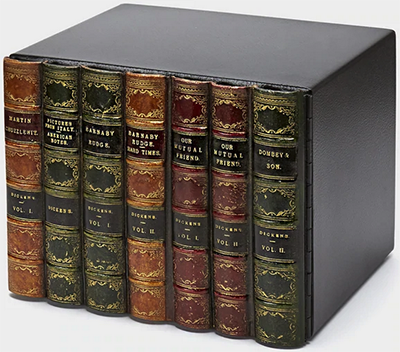 - Antorini - since 2011. Practical desktop file organizers in imitation of historical books.
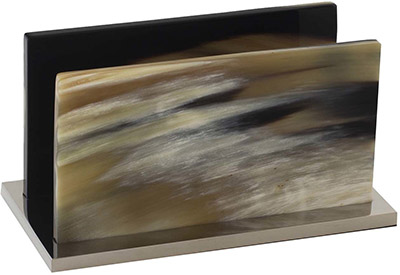 - Artemest - since 2015. "Have a look at the collection of professional Office Accessories available among the selection of the best italian handcrafted design pieces from our collections."
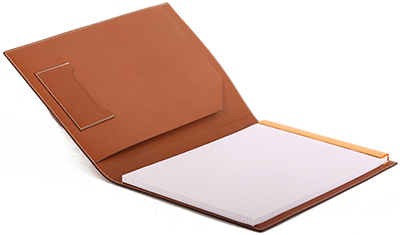 - Atelier Renard - since 1930. "Sellier à Paris." An incredibly stylish writing folder which is genuinely practical.
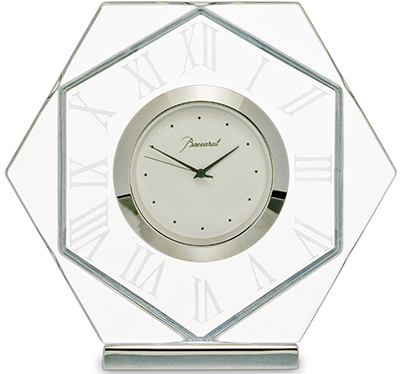 - BACCARAT - since 1764. "Harcourt Abysse crystal desk clock." A distinguished desk accessory handcrafted from weighty crystal, the Harcourt Abysse clock brings symmetry and translucent beauty to any household or office.
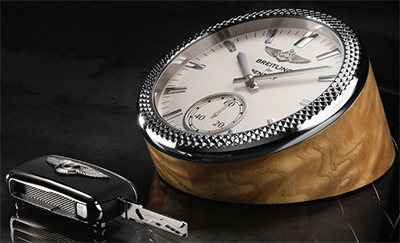 - Bentley Desk Clock - "Perfectly reflecting the Breitling for Bentley universe, the desk clock is likewise distinguished by its original and refined design that is highlighted by meticulous production and finishing."
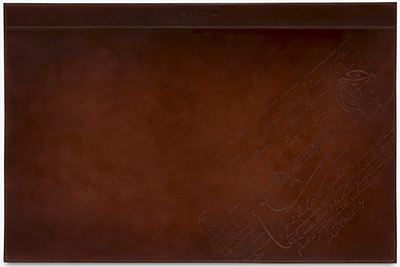 - Berluti - Paris since 1895. "Honouring established house codes of creativity, heritage and craftsmanship, Berluti introduces its new Home & Office Objects collection. Building on the maison’s offering of useful, elegant objects for desktop and tabletop that launched in 2020, Berluti directly addresses the desire for design as well as functionality in daily life."
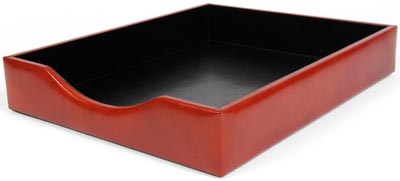 - Bosca - since 1911. "Here is where tradition rules. Our classic designs are the perfect offset to a traditional office but you can also picture them in environments both rustic and modern. Of course we like eclectic. We think that there is art in editing, mixing, and contrasting the look and feel of things that we surround ourselves with. Whatever your approach, eclectic or purist, these classics will work for you."
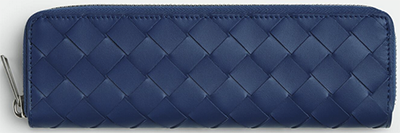 - BOTTEGA VENETA - since 1966. "Intrecciato leather pencil case; Single compartment; Zipper closure; Material: 100% Calfskin; Made in Italy."
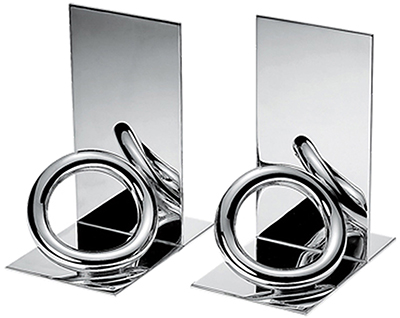 - CHRISTOFLE Paris - since 1830. Desk accessories.
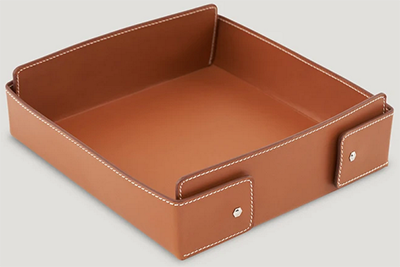 - CONNELLY - since 1878. "Crafted in vegetable-tanned leather from Belgium, the folded effect of the vide poche makes a confident design statement in any home. Vintage palladium hardware from Italy pulls the piece together - literally and aesthetically. And the contrasting stitched detail is a classic Connolly touch."
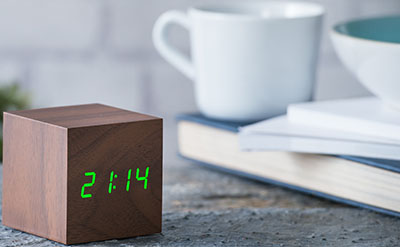 - Cube Click Clock - since 2011. "The Cube Click Clock displays the time, date and room temperature alternately and we think it’s a perfect, unique and clever home accessory, especially if you don’t like a bright light shining in your bedroom at night. But if you need to check the time, you can just click your fingers or gently tap your bedside table and the time will appear, so you don’t have to struggle to find your smartphone in the darkness anymore. Available in white marble, aluminium and copper effect finishes and wooden effect finish options of walnut, teak, beech, maple and black wood."
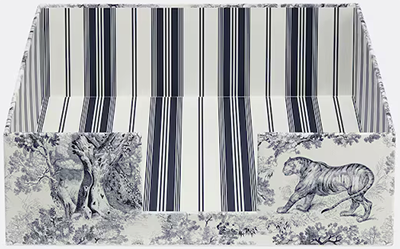 - Dior - since 1946. "There is no greater joy than indulging in good taste." In matters of elegance the detail is as important as the essential. - Christian Dior.
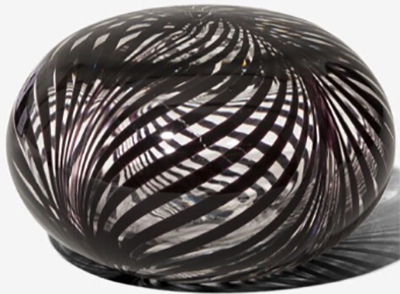 - Diptyque Paris - since 1961. "Homegrown Inspiration. Trinket trays inspired by Art Deco, paperweights decked out in Murano glass... The office becomes a haven of unique landscapes of hand-crafted objects offering the perfect setting for unbounded creativity."
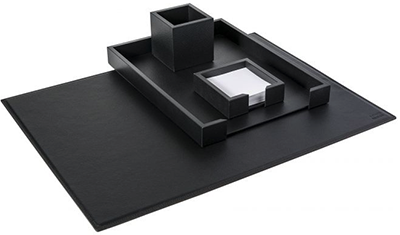 - Dopo Domani - since 1989. "Tidy desk, tidy mind - a clever saying. And if paper, pens and office accessories are organised in style, your thoughts will flow quite freely. With writing sets for beautiful letters, technical accessories for smartphones, laptops, speakers, cables & co., waste paper bins as the final resting place for discarded ideas, and storage for wonderful memories, important documents and the best ideas."
 - EL CASCO - since 1920 "El Casco is known as the manufacturer of the most distinguished desktop accessories available, unequalled in design and quality." El Casco offers a unique range of exclusive desk accessories. To preserve the quality of its origins, the company trains its own junior staff and teaches traditional manufacturing methods. The production is carried out with the greatest care and mostly by hand. All precision parts bear individual serial numbers and are assembled by hand. The flawlessly reflective surface is created by multiple polishing processes that prepare the steel for further refinement.
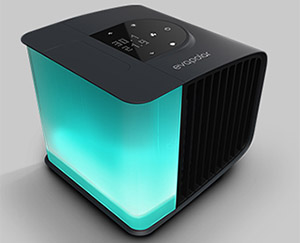 - Evapolar - since 2015. "Be cool. Anywhere. Anytime." Meet Evapolar - the most innovative personal portable air conditioner. Evapolar creates your personal microclimate. Cools the air exclusively for you. Smart desktop solution.
 - Ferm Brass Pencil Holder - since 2006. "Organize and style your desk with this Brass pencil holder. It will keep all your favourite pencils and other office supplies in order."
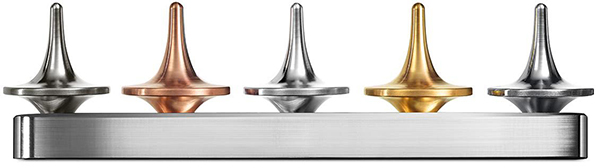 - ForeverSpin - since 2014. "ForeverSpin has brought back the world's oldest toy!" Precision, Durability and Elegance is what sets Foreverspin™ apart from other spinning tops. A Spinning Top that is built to last forever.
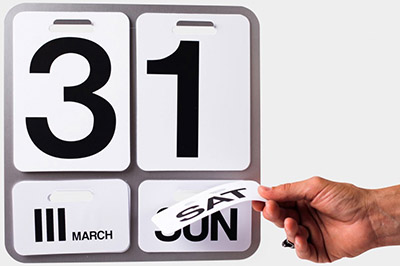 - Formosa Perpetual wall calendar - designed by Enzo Mari 1963. "Formosa is a wall calendar with an aluminium back plate that supports the removable sheets of pvc that make up the date. The font used in the black and red version is Helvetica and the piece is one of the classic pieces of the collaboration between Mari and Danese Milano."
 - Forzieri - set in charming Florence, Italy since 1999. "Journey with us to a place where a magical blend of coveted luxury icons, emerging new talents and gem-like discoveries meld together in an uber-curated selection, bringing the promise of beauty, excitement, and an extraordinary shopping experience." Desk accessories.
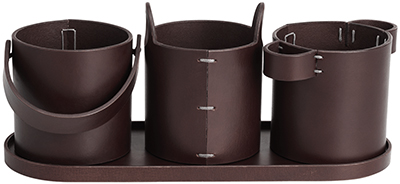 - Fritz Hansen - since 1872. "MODERN ACCESSORIES FOR WORK AND PLAY. BECAUSE THE LITTLE THINGS CAN MAKE A BIG DIFFERENCE."
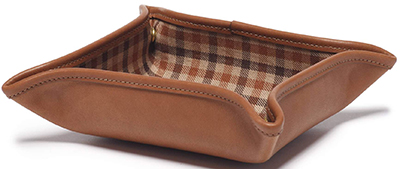 - Ghurka - Fine Handcrafted Leather Gear Made in Norwalk, Connecticut Since 1975. "Work From Home." Upgrade your home office with Ghurka Leather.
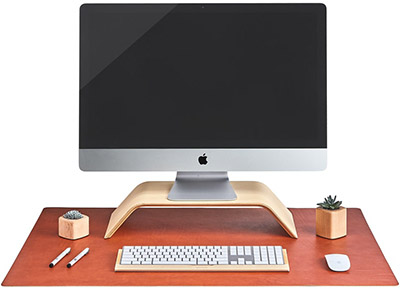 - Grovemade - since 2009. "Modern Desk Organization & Office Accessories." We at Grovemade believe the tools you immerse yourself in reflect who you are and the meaning behind your work.
- Harrods - since 1849. "Luxe Desk Accessories." Elevate your office space with our edit of desirable desk accessories. Exquisite paperweights, heritage desk globes, luxurious blotters and more, these are pieces that will add both style and substance to your office scheme. Look to Waterford for stunning crystal designs or Aspinal of London for timeless accessories, and make your desk work harder by choosing an impeccable table clock from Chopard.
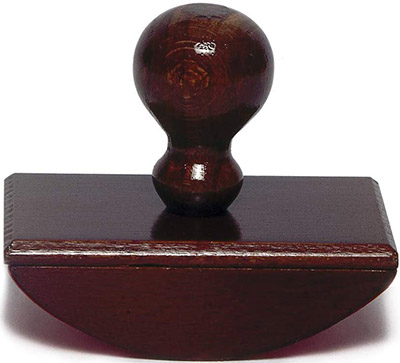 - Herbin Wood Rocker Blotter - since 1837. Desk Ink Blotter - Included a Pre-Cut Blotter Paper.
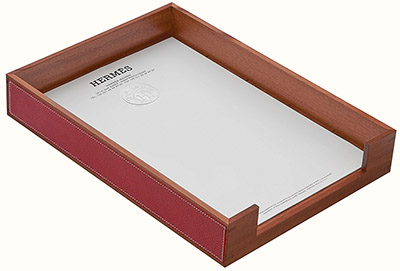 - HermÈs - since 1837. Desk accesories.
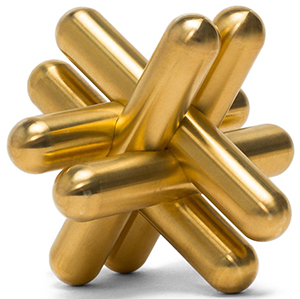 - Jack Puzzle - "Six different notched brass bars make up this brass puzzle, paperweight, and desk object."
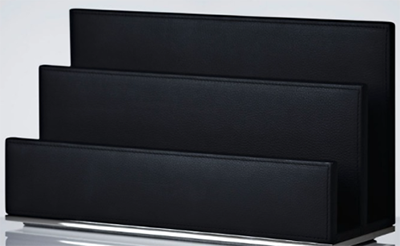 - LINLEY Desk Accessories - since 1985. "Create your dream study with our range of luxury desks and furniture for the home and office. This collection includes unique statement pieces hand-crafted in the finest materials. Browse through our range of standout desks, chairs, paperweights, notebooks and study accessories unique statement pieces hand-crafted in the finest materials."
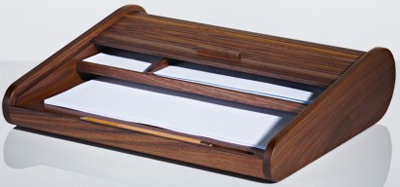 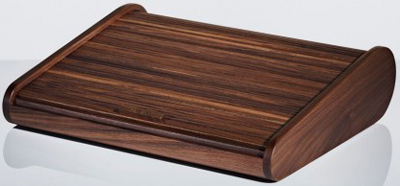 - Linley - "The LINLEY Tambour Desk Tidy is handcrafted in solid walnut. The blotter forms part of the Tambour Desk Set which comprises a compartmentalised pencil pot, letter rack, in-tray, desk tidy with roll-top lid and flat blotter."
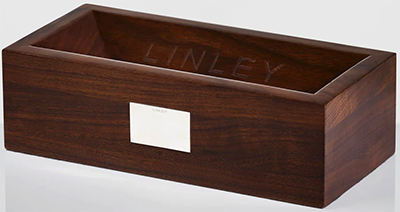 - LINLEY London Brick- since 1985. "The LINLEY London Brick in walnut has been designed to mimic the exact dimensions and form of a genuine British brick. This quirky home accessory has many uses, not only is it weighted to be used as a doorstop but its multiple purposes include a bookend, paperweight or loose change holder."
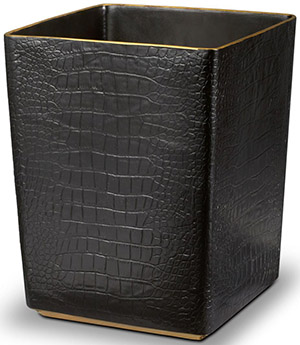 - L'Objet - since 2004. Bookends, bookrests, boxes, clips, coasters, letter openers, magnifying glasses, paperweights, pencil cups, trays, wastebaskets, tissue boxes & stationery.
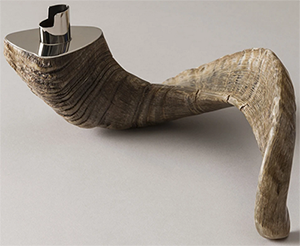 - Lorenzi Milano - since 1929. "Horn, mammoth, gnu, oryx, antelope, following an all-inclusive thread of wildlife. Table lighters take on unique shapes, interpreting the morphology of horns or using combinations of metal and leather or metal and horn." Luxury cigarette & desk lighters.
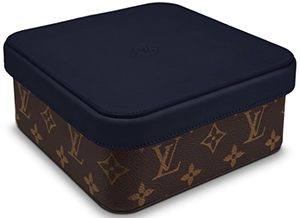 - Louis Vuitton BOX CAMILLE - since 1854. "This set of boxes is a versatile must-have for both home and office use. Featuring a contrasting microfiber lining, they combine the Maison's historic Monogram signature with the new LV Circle motif. Available 3 sizes that can be stored in the Matriochka way."
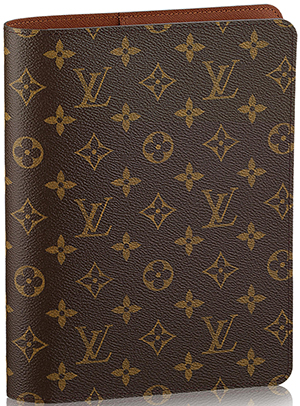 - Louis Vuitton Desk Agenda - since 1854. "Designed to stay on the desk, this spacious leather-lined agenda in Monogram canvas provides an elegant holder for notes and small papers. Desk Agenda refills and address book available separately."
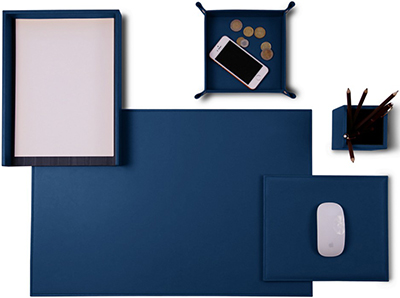 - Lucrin Geneva - founded in Switzerland in 1994. "Office Leather Accessories | Custom Desk Organizers & Office Accessories." LUCRIN proposes a collection of luxury leather accessories handcrafted in full-grain leather for your work and office. Stay work-ready with leather portfolios, notebooks, writing instruments, and agendas that will seamlessly fit your professional attire. Design a neat workspace with exclusive desk organizers namely leather desk pads, pen trays, paper trays, and storage boxes. Bespoke accessories such as coasters, leather baskets, and tissue box holders double as functional and fashionable elements. Customize your accessories in the leather and color of your choice along with elegant monograms!
 - LuxDeco - since 2012. "Luxury Desk Accessories | Designer Office Accessories." From handwoven leather desk sets to elegant crystal paperweights and letter openers, create a stylish working environment with beautiful office wares.
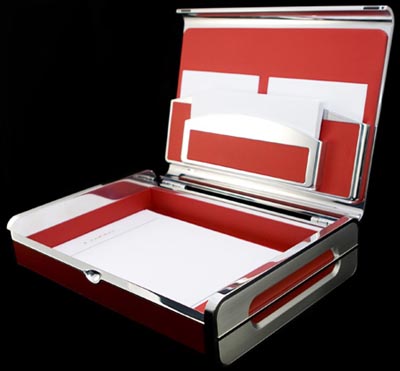 - LUZZO BESPOKE - since 2010. Writing box. Machined and polished aluminium frame with leather trim. Leather trimmed interior with storage pockets for envelopes, paper and pens.
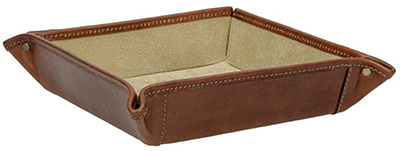 - MAXWELL SCOTT - since 2002. "The Ilario Luxury Leather Desk Tidy."
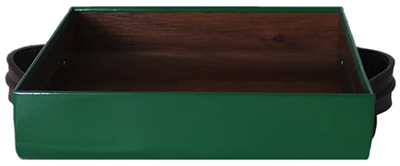 - Nappa Dori - since 2010. "Enhance your home or office desk with an exclusive range of Desk Accessories designed to offer you a stylish working environment. From Vintage Scissors to Brass Bookmarks, all our Desk Accessories are handcrafted and hand-forged from exquisite materials."
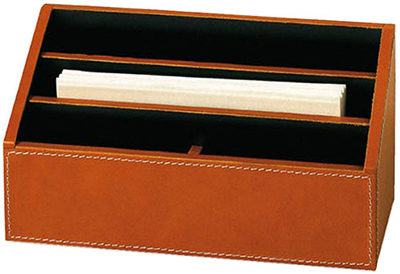 - Nicholas Haslam Letter Holder - established in 1980. Wood-lined letter holder. Available in sand, clay, tan, chocolate or black.
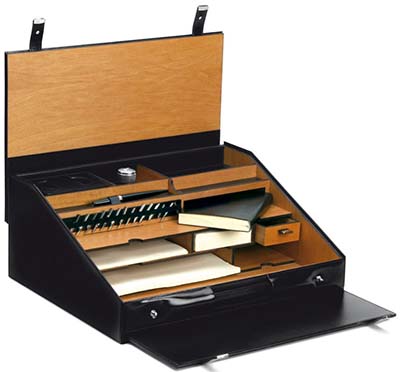 - Pineider 1949 Leather Travel Writing Desk Set - "Handcrafted leather writing desk for travel crafted in classic calfskin." Pineider 1949 Leather Travel Writing Desk Set offers an assortment of stationery, pens and inks stored and organized in a case. Personalization available.
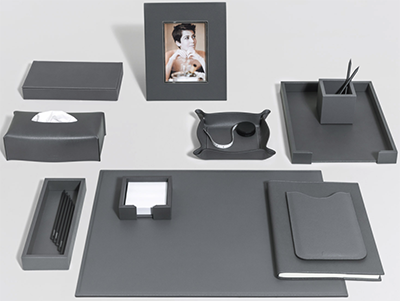 - Pinetti - since 1983. "Handmade in Italy." Elegant materials, clean shapes, and thoughtful design to craft products which will take your workspace, and your work, to an upper level. Plunge yourself in our desk collection and get inspired. Desk sets, letter trays, pencil cup & accessories.
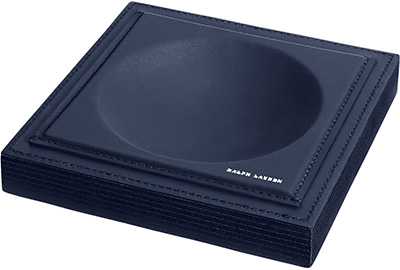
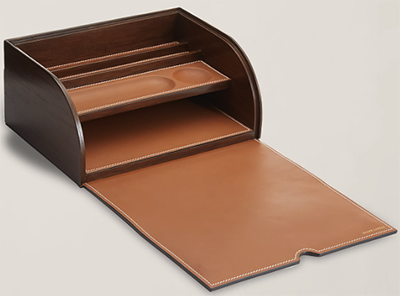 - Ralph Lauren Home - since 1967. "Brennan Leather Décor Collection." Drawing inspiration from Ralph Lauren’s timeless leather accessories, the Brennan collection brings understated luxury to home décor. Crafted from finely grained calfskin with hand-stitched details, each piece in this refined assortment, which includes desk blotters, clocks, and catchalls, comes together to create a well-appointed office.
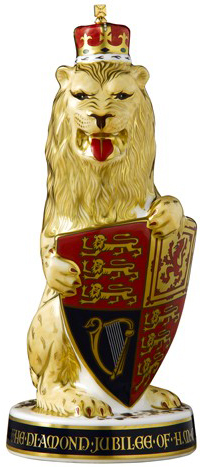 - Royal Crown Derby Paperweights - since 1750. "Made in England." Limited Edition Paperweights.
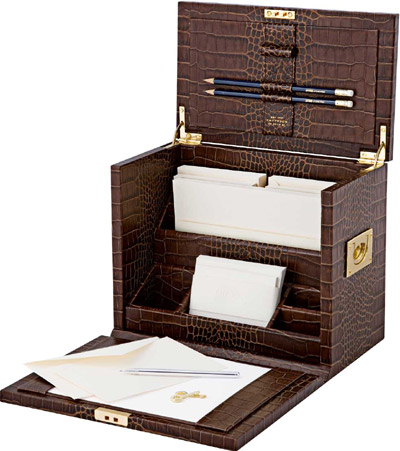 - SMYTHSON OF BOND STREET - since 1887. "Stationery Bureau in Mara." For those individuals who love nothing more than a well-written thank you note, or if you simply love putting pen to paper, our Mara stationery bureau is the ultimate desk accessory. Bound in our Mara collection's distinctive printed calf leather, it's a sophisticated, conversation-starting piece.
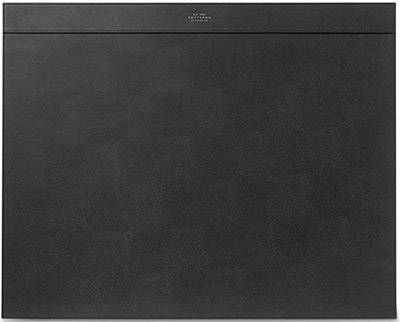 - SMYTHSON OF BOND STREET - since 1887. "View our range of leather desk sets, blotters and pen pots; handcrafted with functionality and style in mind."
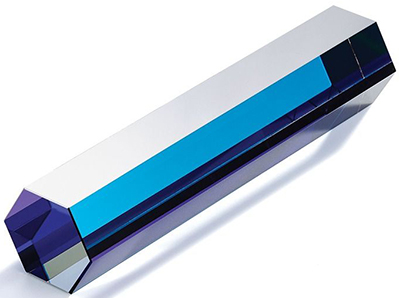 - Swarovski Currents Large Paper Weight - since 2007. "Created by Studio Brynjar & Veronika for Atelier Swarovski, this large pure-crystal paperweight shimmers with Swarovski's stunning Bermuda and Meridian Blue coating. The sleek polygon shape reflects the light in mesmerizing ways, adding a sophisticated touch of color and luxury to your home or office. Decoration object. Not a toy. Not suitable for children under 15."
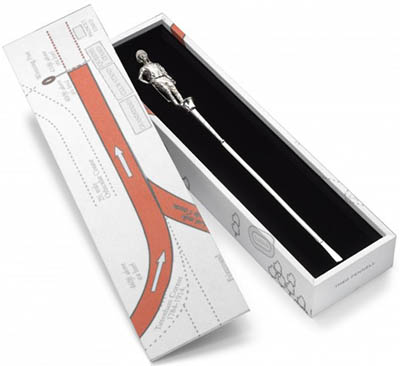 - Theo Fennell - since 1952. "The top of this paper-knife is beautifully sculpted by our master maker into the classic, lean figure of jockey in typical, paddock pose. The blade is forged in the shape of a whip and the whole piece is beautifully hand-made by our great silversmiths here in London, from Sterling Silver and hall-marked at the London Assay Office."
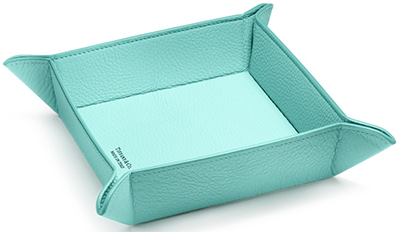 - TIFFANY & CO. - since 1837. "Home Office Designs." Upgrade your home office with expertly crafted desk accessories and decor. Skillfully designed in luxurious bone china, crystal glass, sterling silver and Italian leather, explore our curated collection of decor and desk accessories to add a touch of Tiffany to working from home.
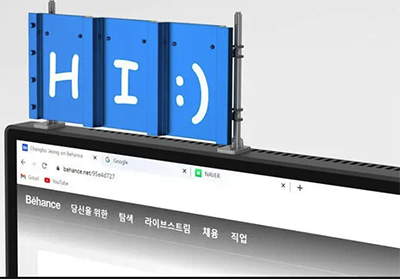 - Work Fence - The Work Fence is a modern-day symbolic partition that adds a silver lining to the exhausted lives of the employees in office spaces.
Stationery
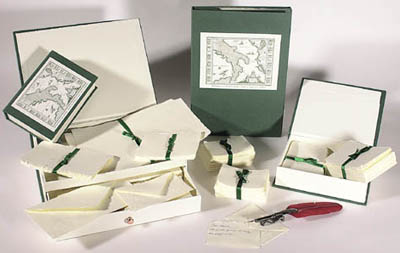 - How to choose good stationery - Modern Mrs. Darcy.
- StationersGuild.org - since 2008. Providing the public with current and relevant information on fine paperss and the stores that sell them.
- STATIONERY - Wikipedia.
- Vellum - a heavy off-white fine-quality paper resembling parchment.
Top 25 High-End Stationery Suppliers
- Alberto Cozzi - via del Parione 35/r, Florence, Italy. You'll find an extensive line of Florentine papers and paper products here.
- Alden Grace - "Fine Personalized Stationery."
- BELLA FIGURA - letterpress stationery.
- Bernard Maisner - "Internationally renowned master calligrapher and stationer."
- BROOKS BROTHERS - letter stationery & envelopes.
- CRANE & CO. - founded in 1801. "Personalized Stationery."
- DAUPHINE PRESS - "Custom Letterpress for Life's Extraordinary Events."
- Fine STATIONERY - "At FineStationery, we are committed to exceeding your expectations and we stand behind our products and service with our Well Sent Guarantee."
- FORGETFUL GENTLEMAN - "Makes simply the finest stationery available for men."
- F.Pettinaroli - "Classic stationer shop, since 1881." Piazza S. Fedele, 2 ingresso da Via T. Marino, 20121 Milan, Italy.
- Haspel - since 1909. Terrapin for Haspel Stationery. Seersucker print liner in envelope flaps.
- James Cropper - "Makers of Fine Paper Since 1845."
- La Rilievo - since 1923. Via Giuseppe Baretti, 22, 10125 Turin, Italy.
- LUNALUX - "Indulging paper habits since 1993."
- Maison Margiela - cotton letter stationary.
- Monique Lhuillier - fine paper.
- Mrs. John L. Strong - showroom: 699 Madison Avenue, 5th Floor, New York, New York 10065 & at Saks Fifth Avenue, 611 Fifth Avenue. "Since 1929, Mrs. John L. Strong has upheld the tradition of handcrafting the finest stationery of the highest quality for discerning customers. We continue to employ old world techniques, including hand engraving of our dies and plates, hand bordering of each card, hand lining of every envelope and hand finishing of every order we produce. We want you to love your paper as much as we do."
- ORLA KIELY
- PAGE STATIONERY - "Old World Craftsmanship Is Back. Letterpress stationary of the highest quality, with the crispest fonts and images."
- PINEIDER - since 1774. "Bespoke stationery."
- PINETTI - "Handmade in Italy."
- RAIMONDI DI PETTINAROLI - has been serving the Milanese nobility since 1776. Corso Venezia, 43, 20121 Milan, Italy.
- ROYAL DOULTON - since 1815.
- SMYTHSON OF BOND STREET - since 1887. "Over 125 Years of British Luxury." Personalized luxury stationery & visiting cards since 1887.
- Terrapin Stationers - since 1913. "Terrapin Stationers creates the finest engraved stationery, all Made in America
for personal, corporate, weddings, invitations and more."
- THE STATIONERY STUDIO - "Personalized stationery."
- THE STATIONERS' COMPANY - founded in 1403. "The Worshipful Company of Stationers and Newspaper Makers".
- THE WREN PRESS - "We provide exceptional invitations for weddings, parties, christenings and Bar/Bat Mitzvahs, personal correspondence cards and headed writing paper, business and visiting cards or any other print based stationery."
|
|


 - Amazon.com.